 Farmers markets across Seattle accept Fresh Bucks. Photo by Pike Place Market.
 A new study from the University of Washington (UW) shows that the City of Seattle’s Fresh Bucks program significantly improves food security and access to healthy foods for enrolled households. Fresh Bucks is helping people with low-incomes access more nutritious foods, reducing the risk of diabetes, heart problems, and other health risks.
According to UW’s release, the research shows that Fresh Bucks households experience a 31% higher rate of food security and consume at least three daily servings of fruits and vegetables 37% more often than those assigned to a program waitlist.
“The UW’s study helps us understand how the City of Seattle’s Fresh Bucks program shows up in the day-to-day decisions of our enrolled households. Findings show that the healthy food access program makes a tangible difference for customers, significantly increasing food security and fruit and vegetable intake. We know these lifestyle changes have long-lasting benefits, and Fresh Bucks is helping to ensure that our most overburdened community members have equitable access to healthy foods and increased quality of life.” – Robyn Kumar, Fresh Bucks program manager at the City of Seattle Office of Sustainability
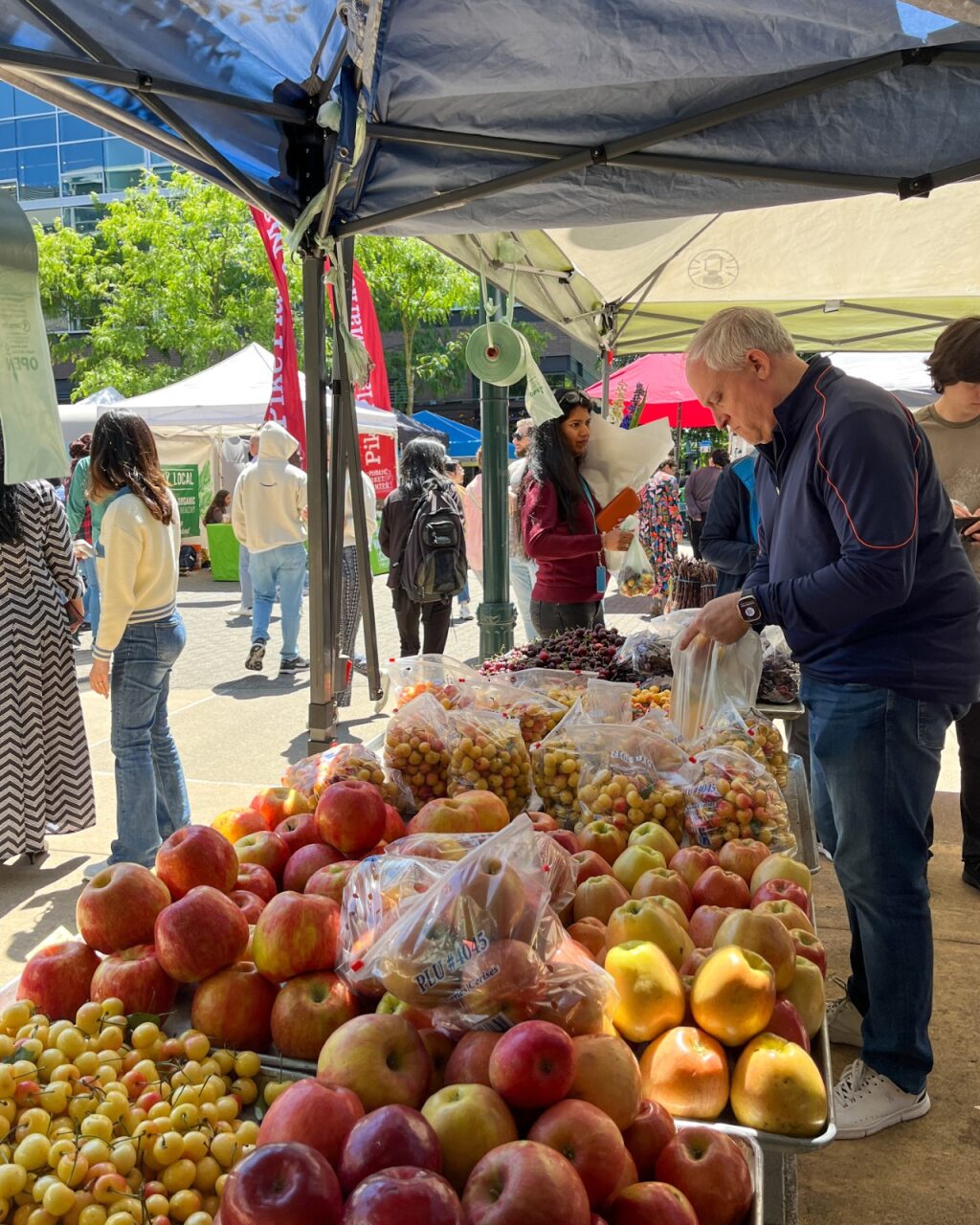
Operated by our team at the Seattle Office of Sustainability and Environment (OSE), enrolled households receive $40 per month in Fresh Bucks to purchase produce at 45 retail locations across Seattle, including farmers markets, Safeway stores, independently owned grocery stores, and more. Fresh Bucks helps strengthen Seattle’s local food system to be resilient against potential disruptions, like climate impacts or economic changes.
For the study, UW researchers compared new applicants who received Fresh Bucks with applicants on the program waitlist. Fresh Bucks differs from other healthy food benefit programs in several ways, including focusing enrollment in households disproportionately impacted by food insecurity and diet-related chronic disease.
“I would classify both of those numbers as pretty large,” said Jessica Jones-Smith in the release, co-author, UW affiliate professor of health systems and population health and of epidemiology and University of California, Irvine professor of health, society, and behavior. “We don’t routinely see interventions that work that well. It’s a pretty big impact on diet in terms of what we can do from a policy perspective and expect to make a difference in food insecurity.”

This year, Fresh Bucks has a new waitlist application. The application will be open for the foreseeable future, and we’ll use a random selection process to enroll eligible applicants. To learn more about Fresh Bucks, visit SeattleFreshBucks.org.
Many thanks to the UW research team for their work on this study – Melissa Knox, Jamie Wallace, Barbara Baquero, KeliAnne Hara-Hubbard, and Jessica Jones-Smith.