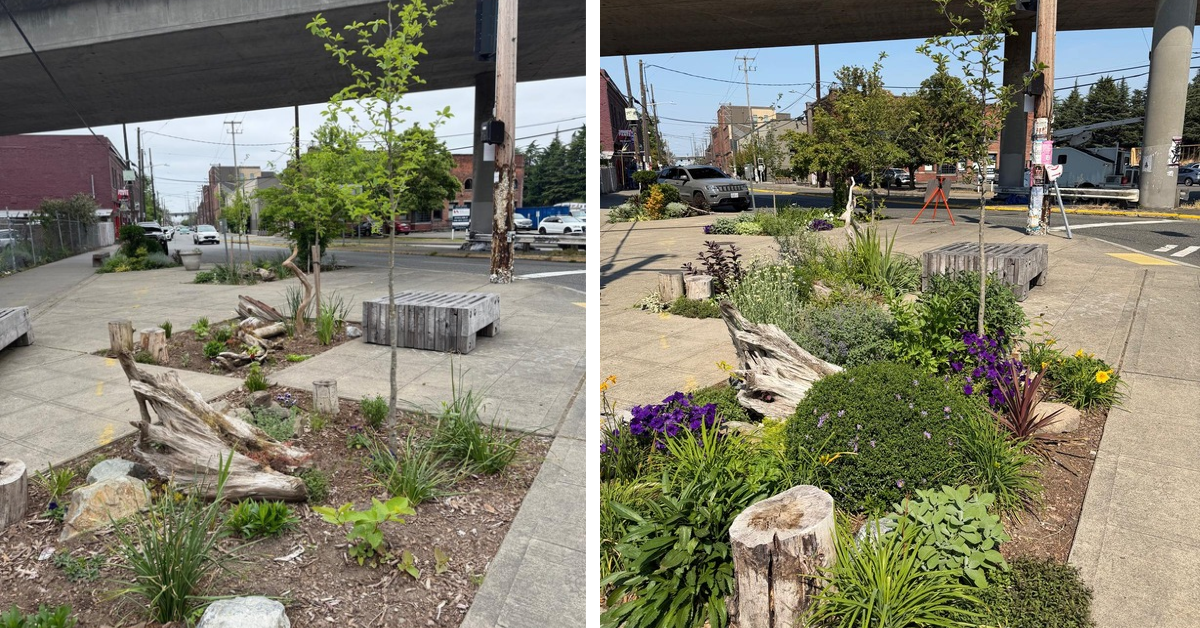
 Before and after floral results of pavement removal and planting by Dirt Corps at the corner of 13th and Airport Way, creating a greener focal point in the heart of Georgetown.
 What does it take to help a neighborhood become more resilient to climate change? Adding trees and greenery is one way we help communities stay cool on hot days, manage stormwater, and create healthier places to live, work, and gather.
We prioritize this work in neighborhoods with low tree canopy cover that also bear the brunt of climate change impacts like extreme heat, flooding, and pollution. In South Park and Georgetown, our Making Industrial Areas Greener program is finding creative solutions to plant in areas with lots of pavement and buildings, which create unique challenges due to limited space, poor soil, high heat, and difficult growing conditions.
But we can’t do this work alone. Our tree experts team up with Seattle’s Duwamish Valley Program, which is led by OSE and a partnership of dozens of community organizations and City departments working to improve climate readiness and affordability, create well-paying job opportunities, and build a healthy environment. Together with community partners and local businesses, we’re creating spaces for trees, planting trees, and adding more greenery even in these paved places.
Trees and greenery are essential to healthy and climate-ready communities. They provide clean air, manage the flow of stormwater, offer food and shelter for wildlife, and create healthier, more comfortable places to live, work, and gather. Trees also increase safety by providing shade on hot days and offering a natural separation between people walking and vehicle traffic.
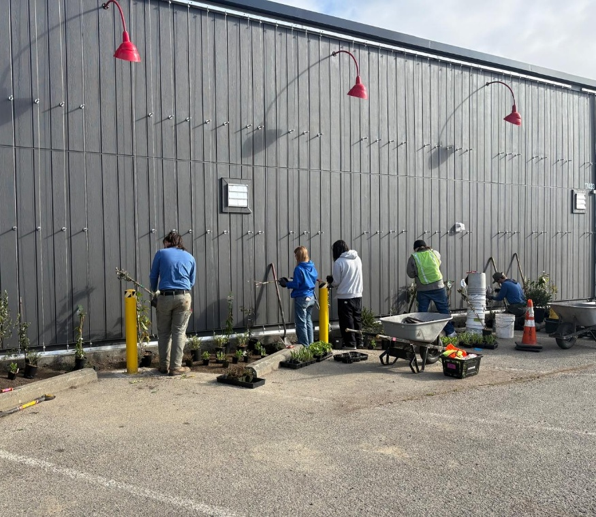
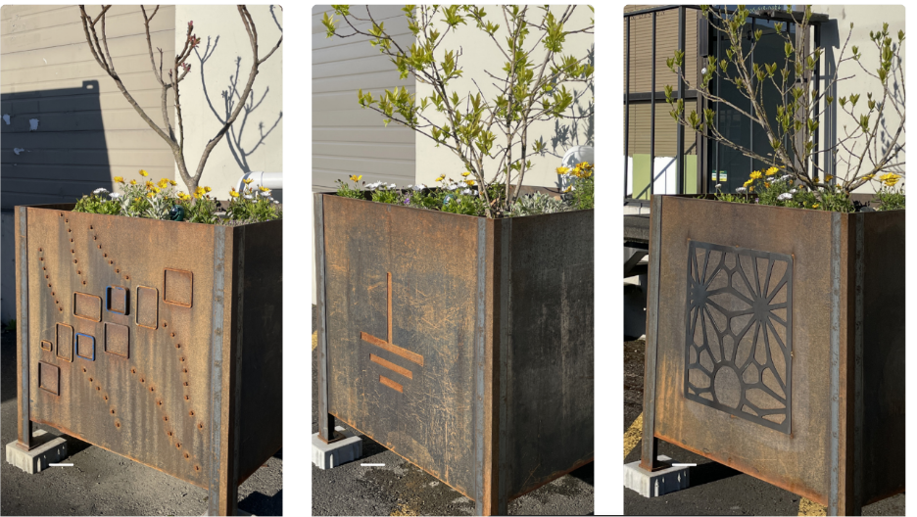
Our partners, Dirt Corps and ECOSS, connect with local businesses and construction and design companies to remove pavement, install green walls, plant trees and plants, and install rain gardens on industrial and commercial properties. Businesses care for and maintain these projects on their properties over the long term, and our partners work with community members and youth to maintain projects on public land.
Since 2023, our partners have installed more than 225 trees, 10,000 plants, 70 rain gardens, cisterns, and planter boxes with trees and plants.
By the end of 2026, we will have removed nearly two acres of pavement across the Duwamish Valley – that’s about one and a half football fields!
This work also creates job training and career opportunities for youth in the Duwamish Valley. Through funding from our Duwamish Valley Program, Dirt Corps trains young people in tree planting and green stormwater infrastructure. This year, Dirt Corps’ 23 Duwamish Valley Youth Corps participants have been trained to build green stormwater infrastructure projects. Youth have planted more than 100 trees and 177 shrubs, caring for more than 11,900 square feet of land.
Learn more about how we’re making industrial areas greener on our new webpage!
Our upcoming tree equity plan will incorporate new data and community feedback to align planting programs with community priorities, including where and what kind of trees should be planted in Duwamish Valley. We’ll keep you updated through our Trees in the Duwamish Valley stories.
We are grateful to our community partners for leading restoration efforts and endlessly advocating for a greener future. Get your hands dirty with us! Join volunteers and plant some trees with us at Duwamish Alive on October 17 at Gateway Park North!