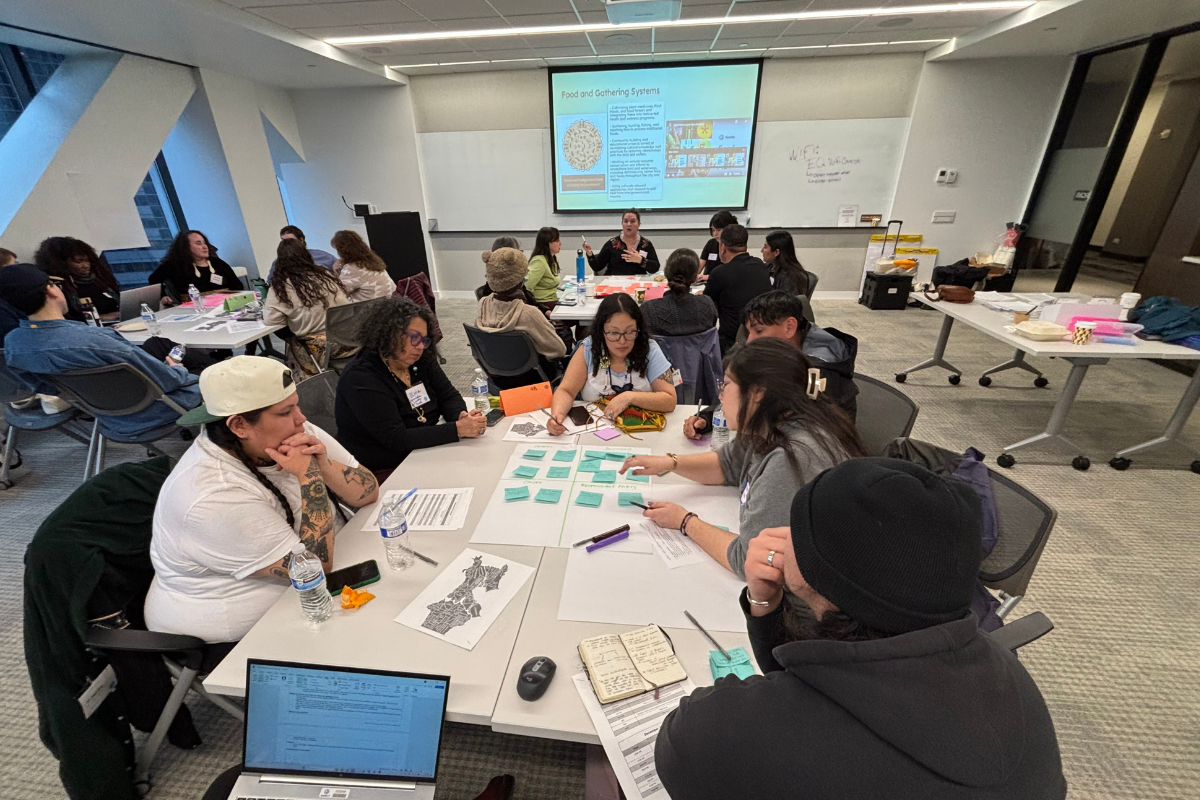
 Participants share stories and experiences at an Indigenous-led community assembly that will inform Seattle’s Updated Climate Action Plan.
 Indigenous people living in and around Seattle are deeply connected to the land, having built their lives around the natural environment of their homelands. For them, climate change impacts like floods, extreme heat, and air pollution disrupt not only their daily lives, but also generations of traditions and connections to land.
For many years, Seattle and our regional partners have been collaborating with Indigenous-led groups and Tribes to develop policies and climate solutions together. Recently, sləp̓iləbəxʷ (Rising Tides), a local Native planning group, partnered with our team at OSE, Seattle’s Green New Deal Oversight Board, and People’s Economy Lab (PEL) to host a two-day Indigenous-led community assembly. About 30 Urban Native and Indigenous people of different ages, professions, and histories came together to brainstorm climate solutions that will inform Seattle’s upcoming Climate Action Plan Update.
sləp̓iləbəxʷ (Rising Tides) is a group of Native architects, planners, and community members developing decolonization strategies for community development. They do this by centering Indigenous cultural practices and knowledge in the decision-making. sləp̓iləbəxʷ has partnered with City departments and Native-led organizations to help shape local projects such as Seattle’s 2024 Updated Food Action Plan.
How Climate Shapes Experiences

The assembly members participated in four breakout sections focusing on food, environmental racism, organizing, and housing. sləp̓iləbəxʷ (Rising Tides) led the discussions, as well as hands-on mapping and brainstorming activities.
Food Systems and Gathering
Most of the participants had stories to share about Native foods and practices. Adults described harvesting cedar bark for many uses, the medicinal devil’s club plant, and salmonberries. Younger participants expressed their desire to harvest and gather Native foods and described how they have to rely on farmers markets, Community Supported Agriculture (CSA) programs, or community gardens to access these foods.
Many assembly members described how difficult it is to find traditional foods such as wapato, a starch, or camas, a wildflower, in the city. Several people offered increased public transportation options to traditional harvesting grounds to help Urban Natives more easily access land for harvesting. They also described how City-supported Indigenous-led food programs could help increase access to traditional foods inside urban areas.
Environmental Racism
Many assembly members spoke about pollution in their neighborhoods from wildfire smoke, factory emissions, and noise from nearby heavy industry with lack of accountability from the responsible parties. Another person described contaminated soil that prevented them from being able to play outdoors as a child.
Across these stories, participants talked about the need for structural change in government and business, which can do more to take responsibility and right the wrongs of emitting pollution and other environmental harms.
Organizing and Wealth-Building
The breakout groups highlighted the importance of financial support to maintain and strengthen Native-led organizing and wealth building. Participants described how the ability to gather and be in physical community with one another is key to maintaining cultural traditions, relationships, and collective care. These foundations are also vital for community climate resilience, which is being prepared for, during, and after an extreme climate event.
Housing and Adapting to Climate Change
Assembly participants named lack of climate resilient housing options and affordability as climate concerns for themselves, their families, and their communities. Many described that their homes don’t have sufficient heating and cooling systems for them to comfortably and safely withstand extreme weather events. They discussed how the City could help make housing with these upgraded systems more affordable and available in their neighborhoods.
The Community Assemblies Model
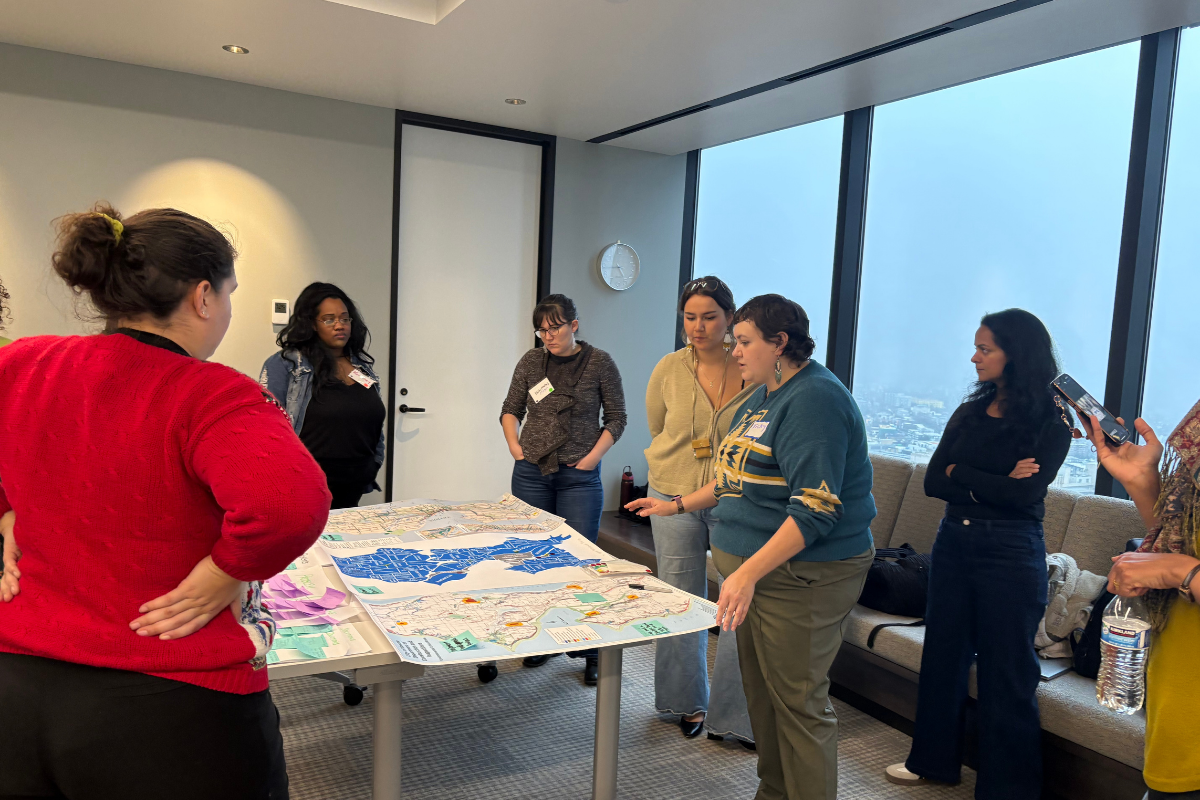
Community assemblies bring people together to influence government action. The City of Seattle focuses climate adaptation efforts and investments in communities hit first and worst by climate change, including Black, Indigenous, and People of Color (BIPOC), immigrants, youth, and people in low-income neighborhoods. We work closely with organizations embedded in these communities to meet people where they are.
The Green New Deal Oversight Board and OSE have continued to work with PEL and our team to establish the community assemblies model in Seattle. We’ve partnered with The Washington Bus, MLK Labor, and the Urban League of Metropolitan Seattle to discuss climate solutions with youth, union members, community advocates, and more. Learn about previous assemblies on our blog.
What’s Next
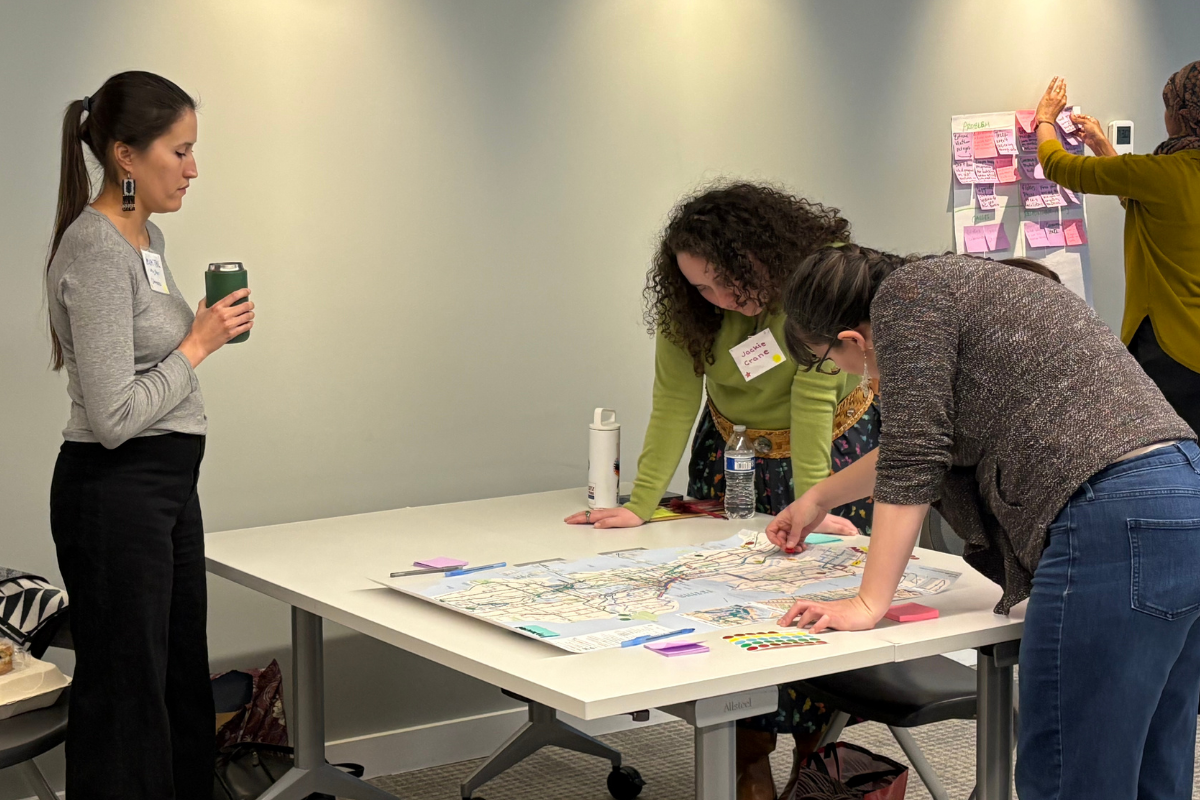
sləp̓iləbəxʷ will compile learnings from the assembly into a future report of recommendations for climate action. The recommendations from all community assemblies will inform Seattle’s Climate Action Plan Update and the Green New Deal Oversight Board’s priorities. The updated Climate Action Plan will be developed around community input and focus on climate resilience, building a green economy, protecting public health, and heavily reducing emissions.
We are so appreciative of all the assembly participants, sləp̓iləbəxʷ (Rising Tides), PEL, the Oversight Board, and City partners.
For more information on some of the ways Tribes and Native and Indigenous people are shaping public policy in Seattle, visit:
- Indigenous-Led Climate Initiatives Fund coming in 2026 — subscribe to our newsletter to be the first to hear about it. The Fund supports existing projects that center climate strategies led by Tribal Nations and Native communities.