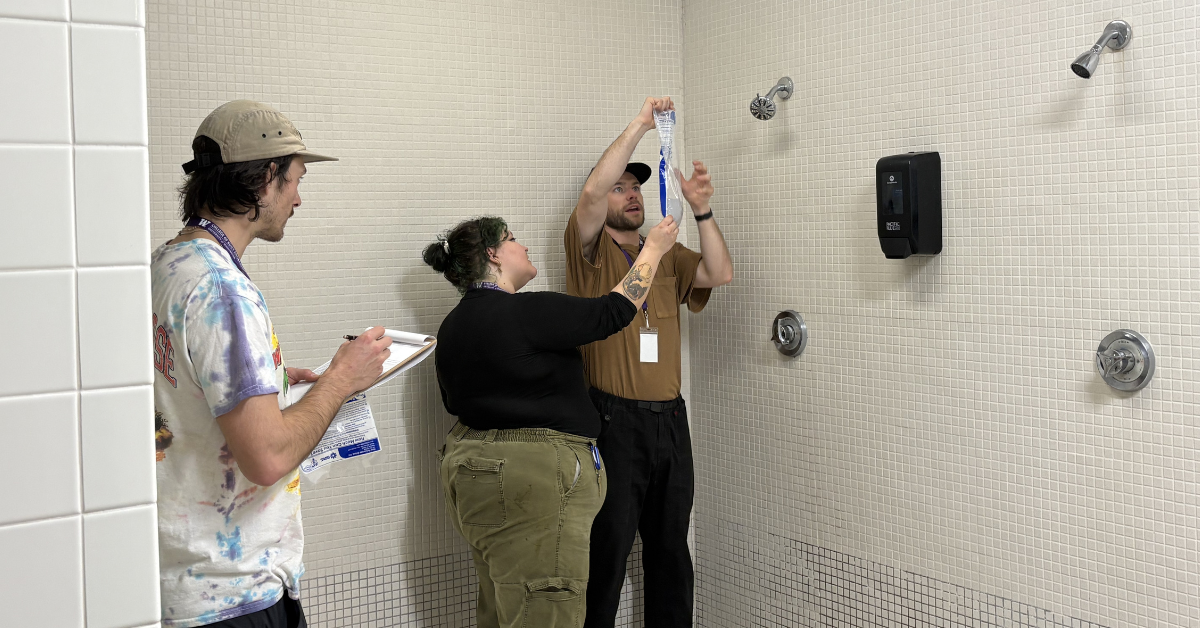
 Azlyn Vaughn (middle), project lead for the Downtown YMCA energy and water assessment, showing students how to measure water flow in the pool showers at the YMCA.
 Share this story on social media:
Last month, we joined South Seattle College students at the historic Downtown YMCA to watch climate work in action! South Seattle College students are working in the field helping building owners save money and transition to clean energy while preparing for jobs in the growing green workforce.
Buildings are responsible for 40% of climate pollution in Seattle. To reduce emissions, building owners are bringing in experts to reduce wasted energy and update old systems and appliances that use fossil fuels. They need highly trained, well-paid, local workers who can help advance energy efficiency and reduce pollution, making buildings healthier, safer, and more resilient to climate change.
We shadowed Azlyn Vaughn, the YMCA project lead and a junior with South Seattle College’s Sustainable Building Science Technology (SBST) program. Azlyn and other SBST interns teamed up with students from the University of Washington to measure the energy and water use of YMCA facilities, like bathroom sinks, showers, and lights, as part of Seattle’s Building Tune-Ups Program.

Azlyn had been working in construction for five years when she decided to look for a degree program that offers technical knowledge and hands-on experience as a project manager. SBST is a Bachelor of Applied Science degree program that prepares students for leadership roles in operating, managing, and assessing high-performing, energy-efficient buildings.
“I just really dedicated myself to understanding sustainability and how these buildings work and really decided that, for me, what was important was giving back to the city and finding ways to make the city healthier and more stable,” Azlyn said. “I think that’s the most rewarding part of what I do, besides knowing that I’m helping the planet as a whole.”
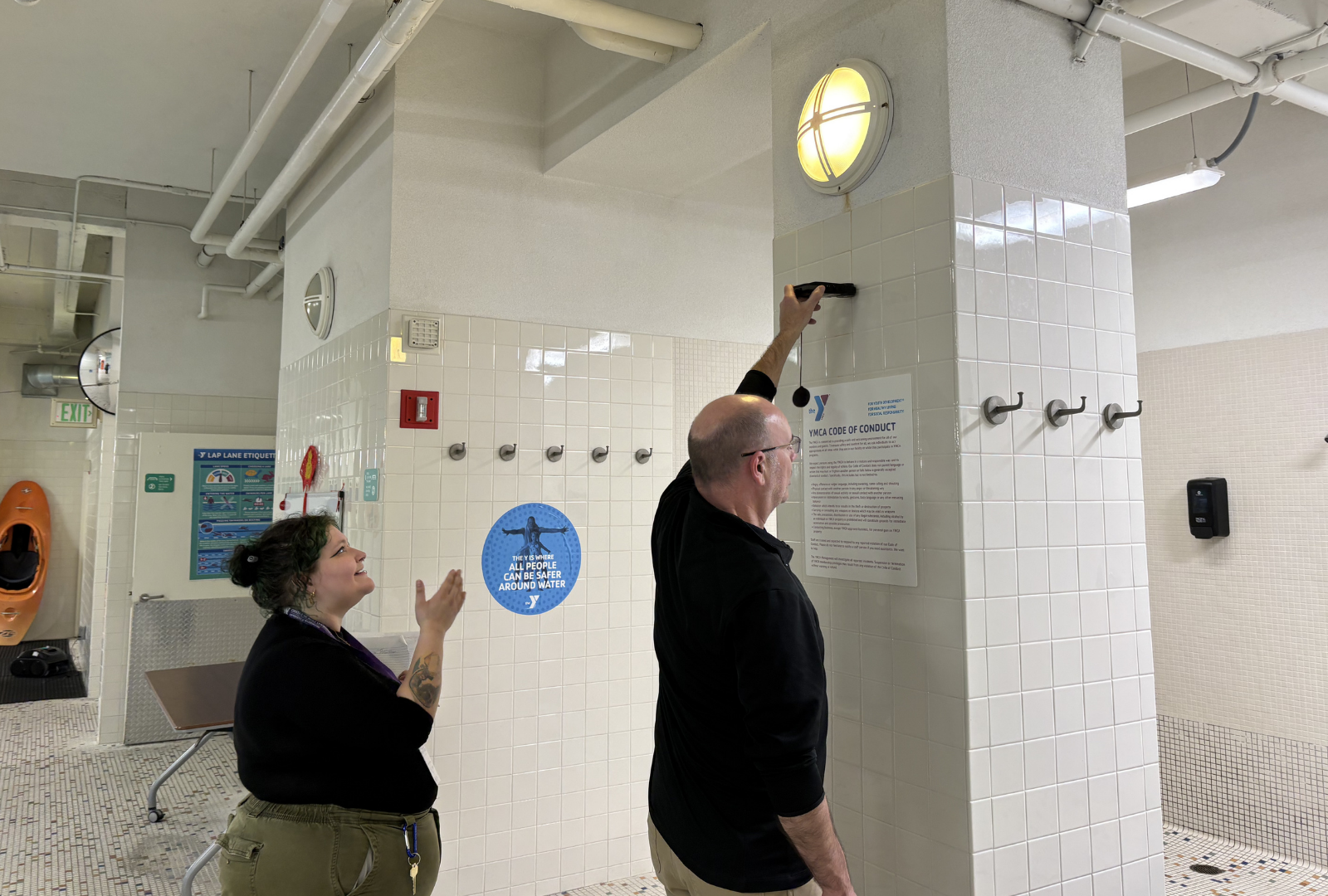
As the project lead, Azlyn will analyze data collected by students and support the completion of a full building assessment report for the YMCA. As a nonprofit, the Downtown YMCA faces cost barriers to assess and upgrade the building.
Factors such as loss of federal funding, limited staff time, and limited expertise affect the organization’s ability to complete the required assessment. The seven-story historic building has office space, recreational activities for community members, transitional housing for young adults, and an indoor pool.
Progress Toward Eliminating Emissions from Large Buildings by 2050
We invest directly in climate workforce programs and partner with longtime providers like South Seattle College to connect students with job opportunities.
Our team connects SBST interns with nonprofits and other building owners that need additional support with meeting energy efficiency requirements. Buildings need love to operate smoothly and sustainably, just like any other appliance. Our “tune-ups” program helps building owners find smart, low-cost ways to reduce energy and water use. On average, tune-ups can cut a building’s energy use by 10–15%.
In 2020, our staff at OSE teamed up with South Seattle College’s SBST program to create a paid internship to support nonprofit and community-building owners with tune-ups. Rather than create a new program, we joined forces with an existing, local workforce development program to connect these students with building owners in need of their expertise.
Since then, more than 50 students have earned their bachelor’s degrees and completed paid internships.
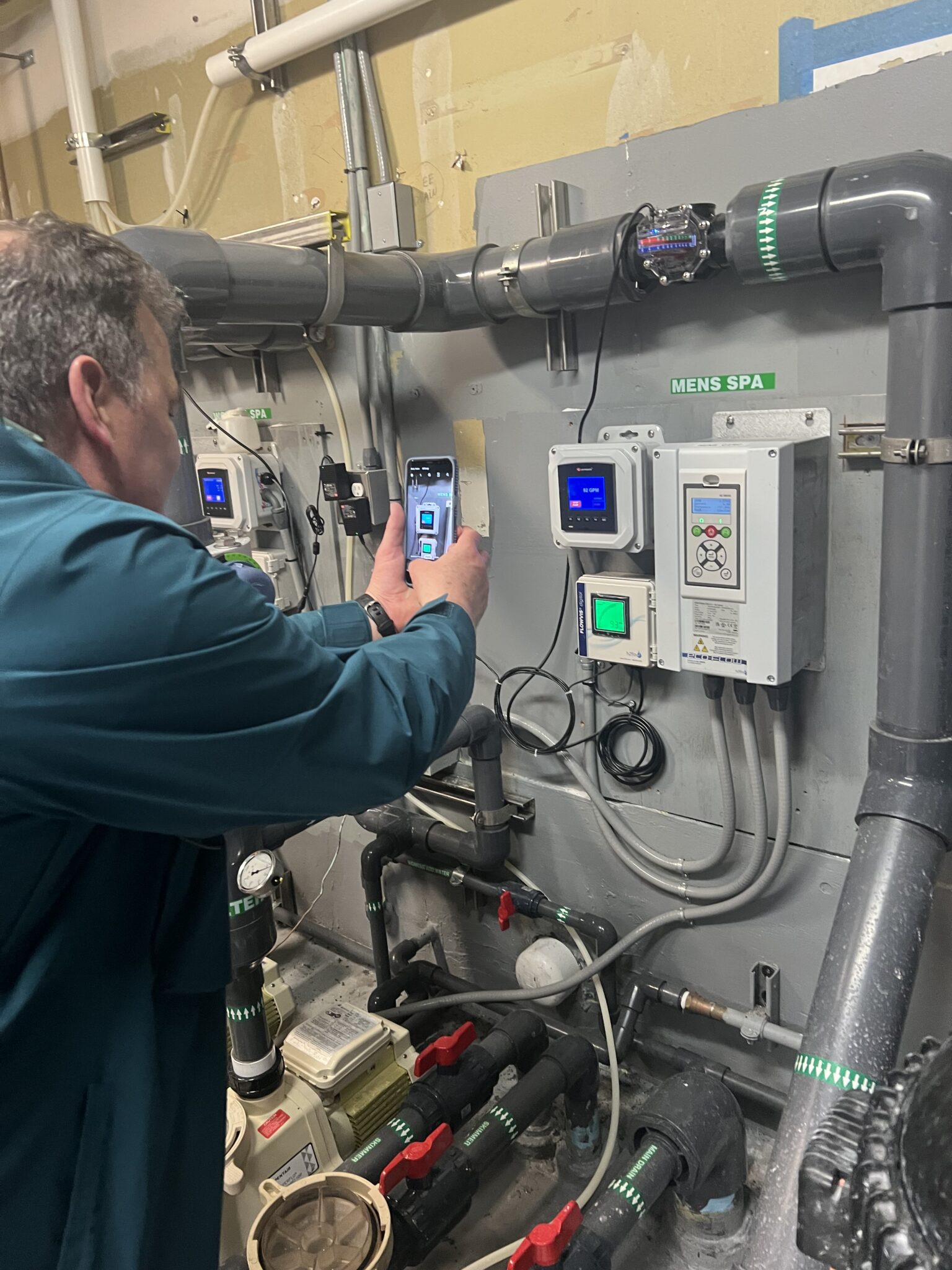
We’re growing the green workforce by adding local climate job opportunities through new laws, regulations, and programs. One example of this is Seattle’s Building Emissions Performance Standard (BEPS) law, under which most large buildings will need to achieve net-zero emissions by 2050. Policies like this create local jobs in electrification, construction, engineering, and more.
The success of this partnership helped SBST take on an even bigger role in the region. The program is now a key player in the new Pacific Northwest Building Training and Assessment Center (BTAC), funded by a $900,000 U.S. Department of Energy grant.
The center is a collaboration of local college programs that are training the next generation of building energy professionals. It creates a clear pathway for students to become qualified energy professionals to support local and state building performance standards.
Thank you to the amazing interns for their work, South Seattle College for their partnership, and building owners across the city for helping to ensure a healthy and thriving Seattle for all.
Want to learn more? Visit the City of Seattle Buildings and Energy page or contact the OSE Buildings & Energy team at cleanbuildings@seattle.gov. Visit the SBST webpages or contact the SBST team at ross.vaswanibye@seattlecolleges.edu.
Stay tuned for more workforce development opportunities coming soon by subscribing to OSE’s newsletter.