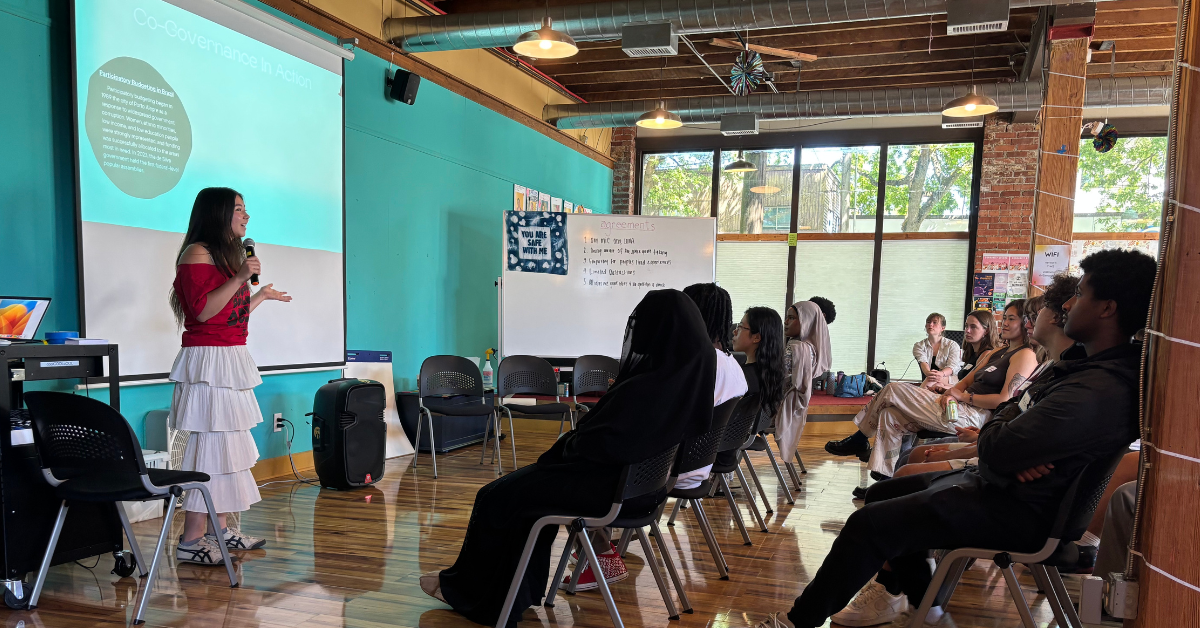
 Towa Nakano-Harris, a Washington Bus Fellow and youth climate assembly facilitator, presents to the youth community assembly.
 Climate solutions are strongest when they reflect the voices and experiences of communities on the frontlines of climate change. Two newly released reports from sləp̓iləbəxʷ (Rising Tides) and the Washington Bus Education Fund (WA Bus) highlight recommendations from youth and Indigenous community members on topics like public health, transportation, extreme weather, Indigenous knowledge, and more.
The reports uplift the lived experiences of participants and their communities while showcasing their recommendations for City of Seattle policies, programs, and resources to build healthier and more resilient communities.
Climate change affects every community differently, and the people most impacted know best what solutions their communities need. This feedback will help shape Seattle’s Climate Action Plan update. The plan will chart a course for how Seattle will reduce pollution, prepare for climate impacts, and build a healthier city for everyone.
Seattle’s 2025 Indigenous and youth community assemblies built on our first pilot community assemblies in 2024 in partnership with Seattle’s Green New Deal Oversight Board, the Martin Luther King Jr. County Labor Council (MLK Labor), and the Urban League of Metropolitan Seattle.
Through continued support from our partners on the Oversight Board and with the People’s Economy Lab, each of these collaborative sessions has allowed us to hear directly from community members about their priorities and ideas for addressing climate change.
What We Heard: Community Priorities
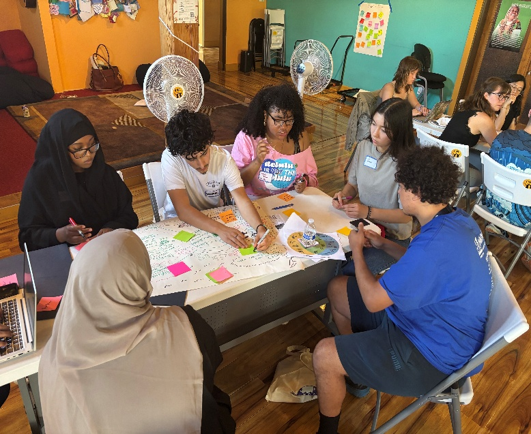
The Washington Bus Education hosted the youth community assembly in August 2025, bringing together youth ages 15 to 25 to explore how climate change shows up in everyday life through transportation, neighborhood conditions, public health, air quality, litter, and extreme heat.
The youth leaders identified several priorities for their communities:
- Creating cleaner air and healthier neighborhoods by tracking air quality in neighborhoods, expanding access to air purifiers, and growing tree canopy in areas that experience the worst air pollution.
- Building climate-ready buildings and making upgrades that use less energy and stay cooler during extreme heat.
- Investing in easier-to-access and more reliable transit, as well as safer walking and biking routes, so young people and community members can use climate-friendly ways to get around.
- Cleaning up neighborhoods by addressing litter and pollution through community education and programs that support residents in caring for their neighborhoods.
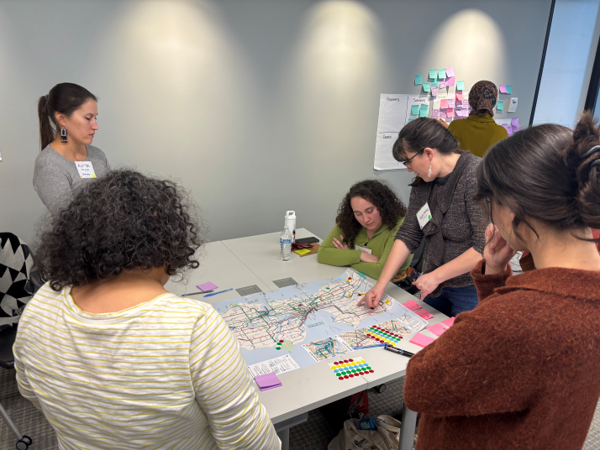
December’s Indigenous Community Assembly centered Traditional Ecological Knowledge, which is knowledge and practices passed from generation to generation, storytelling, and supporting and restoring Native people’s deep cultural connections to the land.
About 30 Urban Native and Indigenous people identified several priorities for their communities:
- Restoring and caring for the land by planting more native plants and trees, restoring natural habitats, supporting Indigenous practices for caring for the land, and returning land to Indigenous stewardship.
- Preparing communities for extreme weather by building homes and buildings with air conditioning and air filtration systems, and improving emergency preparedness practices before, during, and after extreme climate events.
- Improving access to healthy, culturally important foods by expanding community gardens, improving access to traditional harvesting and gathering spaces, creating more shared kitchens, and supporting community-owned grocery stores.
- Supporting Native communities by increasing funding for organizations that serve Native people in Seattle, expanding access to social services, and creating more shared community spaces.
What’s Next
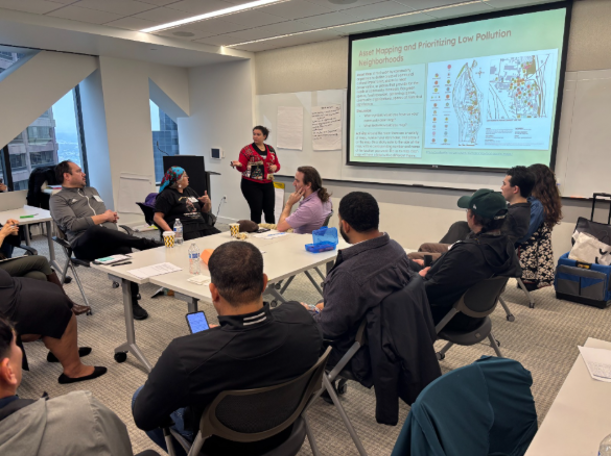
We are incredibly grateful to all the 2025 assembly participants, Washington Bus Education Fund (WA Bus), sləp̓iləbəxʷ (Rising Tides), People’s Economy Lab, the Oversight Board, and our partners for your leadership, knowledge, and time. The recommendations shared through these assemblies will help ensure that Seattle’s Climate Action Plan reflects the priorities of communities across the city.
We are continuing to gather input from and collaborate with partners across academia, business, health, philanthropy, regional and Tribal governments, and community organizations as we update the plan. Earlier this year, we also announced the grantees of the First Peoples Climate Fund, a $5.5 million investment developed with Seattle Foundation that centers Tribal and Native leadership, ancestral knowledge, and community-driven climate solutions. Read our blog to learn more about the Fund and the Indigenous-led climate solutions it supports.
Assemblies are just one way we gather. During Pacific Northwest Climate Week from July 13-17, we hosted the Climate Action Plan Regional Partners Forum, a 100-person-plus convening of partners from diverse sectors, to share perspectives and contribute to Seattle’s climate future. Explore highlights from PNW Climate Week!
Stay updated on Seattle’s Climate Action Plan and ways to engage by signing up for our newsletter! Read the full reports from the youth and Indigenous community assemblies on People’s Economy Lab’s website.