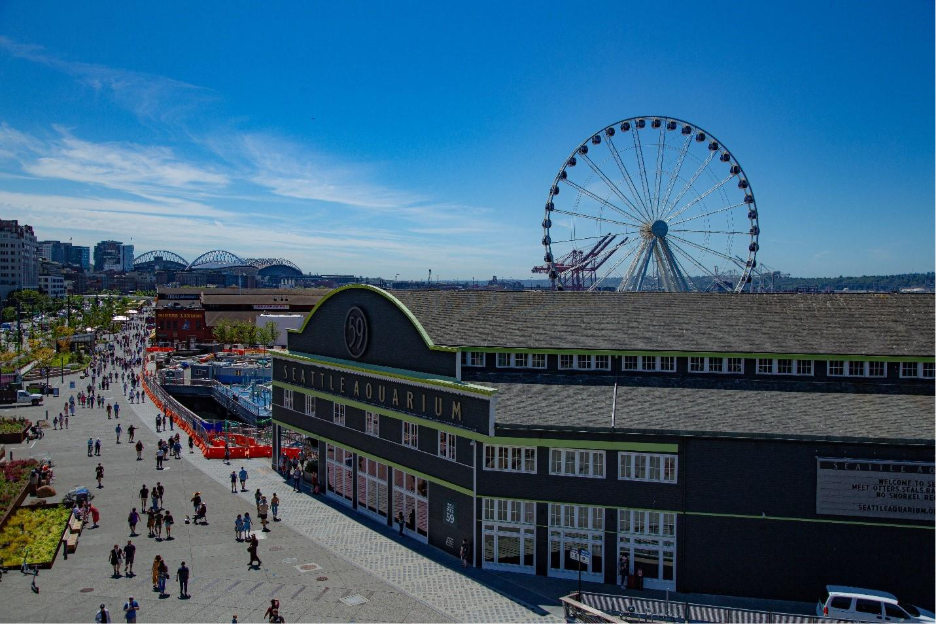
 The Seattle Aquarium’s Pier 59 Building along Seattle’s new Waterfront Park.
 The Seattle Aquarium knows firsthand that climate change, which brings warmer waters, more acidic oceans, habitat destruction, and much more, threatens our marine environments.
Seattle is working hard to reduce pollution from City-owned buildings by swapping fossil-fuel appliances for clean energy alternatives, and also supporting other large buildings across Seattle, including our friends at the Aquarium. Earlier this year, we worked with the Aquarium and our partners at Ecotope, an energy efficiency engineering organization, to put together a plan for how the Aquarium can meet its emission reduction goals in its facilities on Piers 59 and 60 on the Seattle Waterfront.
Note: The Aquarium’s new Ocean Pavilion, which is LEED Gold-certified, was not part of this study.
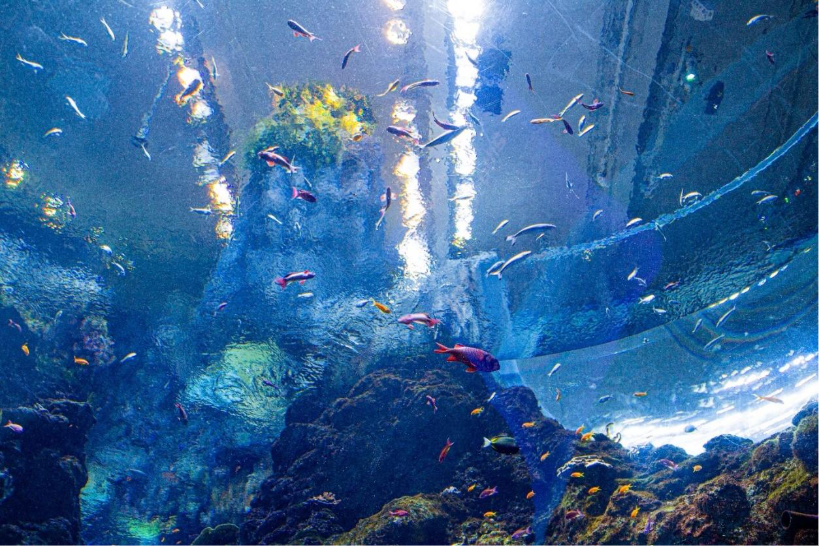
The study highlighted that the Seattle Aquarium is on a unique pollution reduction journey — their team has to balance keeping tens of thousands of animals happy and healthy while making changes behind the scenes. A major area for improvement is reducing fossil gas. Gas accounts for a significant portion of the Aquarium’s emissions, as a lot of gas fuel is required to keep the Aquarium’s older buildings comfortable for more than a million annual visitors.
“The Seattle Aquarium is a complicated operation. We are not a restaurant, but we have one. We are not an office building, but we have office space. We are not a hospital, but we have vet facilities. If we can go all-electric, anyone can,”
said Jesse Phillips-Kress, Vice President of Facilities and Operations for the Seattle Aquarium.
The new, 100% electric Ocean Pavilion for warm-water marine habitats highlights the Aquarium’s decarbonization approach. Before the Ocean Pavilion opened, the Aquarium’s warm-water habitats were housed in another Aquarium building on Pier 59, which used gas to warm the water. Outside of the water, visitor comfort in the Pavilion is maintained without the use of fossil fuels thanks to electric, energy efficient heating and cooling systems.
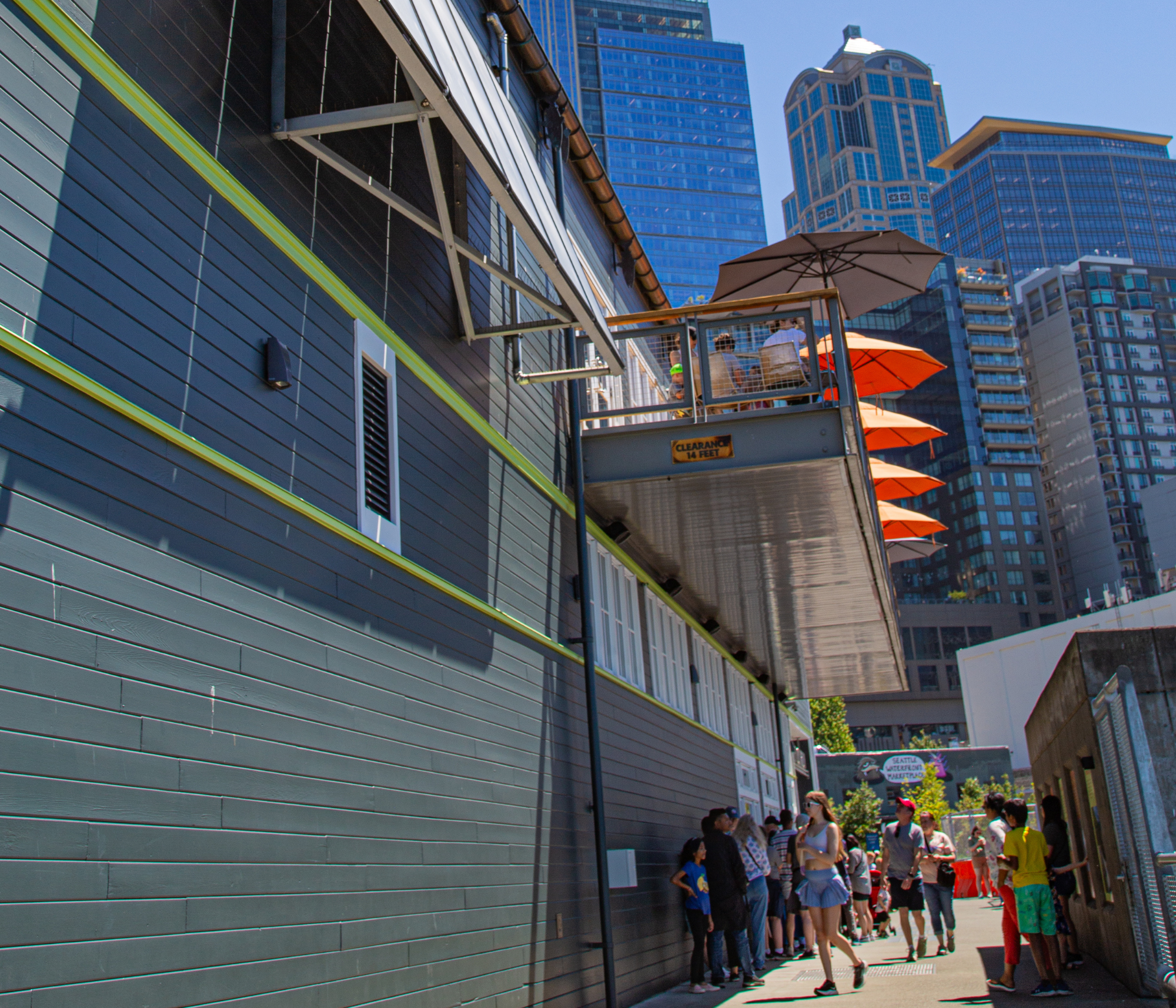
With the Ocean Pavilion setting the example, the Aquarium is also focused on its older infrastructure on Piers 59 and 60. Both buildings are many decades old, with a combination of mechanical systems that need cost effective and long-lasting upgrades that will also reduce emissions. Undeterred, the Aquarium is already curbing pollution with solar panels and new electric induction stoves in the café’s kitchen.
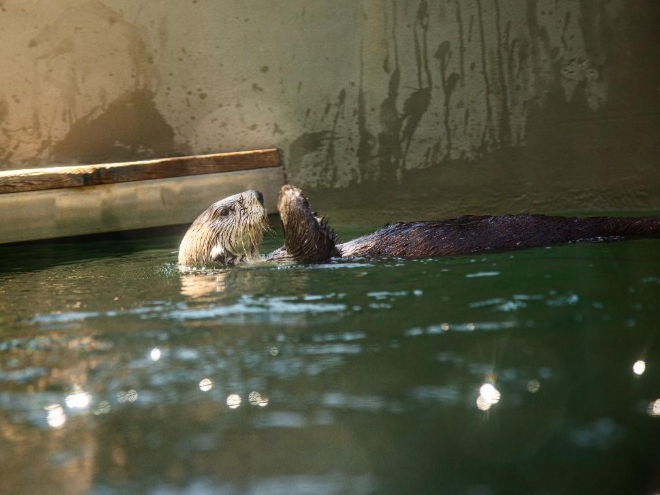
Some improvements will be routine, like optimizing the building automations systems to operate as efficiently as possible. Other upgrades will be more unique — the Aquarium is planning to install customized heat pump solutions to maximize the efficiency of heat transfer between building and habitat heating and cooling.
The Aquarium is working to eliminate emissions from all of its facilities as part of its regenerative plan. Seattle’s Building Emissions Performance Standard (BEPS) requires most large buildings to reach net zero emissions as early as 2041 for a healthier, safer, and more climate resilient city.

To learn more about the Aquarium’s plans to eliminate climate pollution from its buildings, check out this case study prepared by OSE.
Beyond the Aquarium, the City of Seattle and our partners are committed to reducing pollution from buildings, which are responsible for nearly 40% of Seattle’s climate pollution. Learn about our work to eliminate fossil fuels from City-owned buildings, such as libraries, pools, fire stations, and community centers.