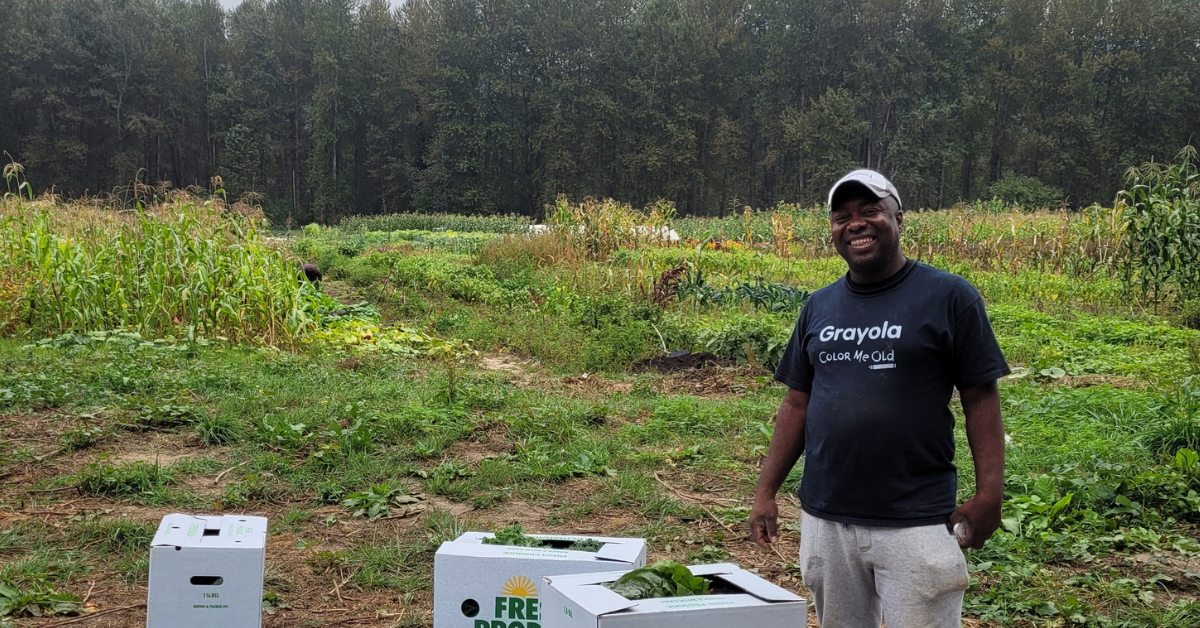
 Salaam Family Farm from the International Rescue Committee (IRC) New Roots
Program in Kent, WA harvests produce for a wholesale order. Photo by IRC New Roots.
Salaam Family Farm from the International Rescue Committee (IRC) New Roots
Program in Kent, WA harvests produce for a wholesale order. Photo by IRC New Roots. In a growing citywide movement, the City and our educational and community partners are using purchasing power to strengthen our local food system.
This year, City of Seattle-supported food programs will purchase more than $1.3 million in local and sustainably grown foods. University of Washington (UW) Dining will join the Coolfood Pledge under its upcoming Sustainability Action Plan, and Seattle Public Schools (SPS) will pursue Eat Real Certification to advance fresh, nutritious, and climate-friendly school meals.

City of Seattle Food Program Impacts Are Growing
City-supported food access programs will collectively purchase more than a million dollars in food from local farmers and producers in 2026, most using sustainable growing practices. This includes over 50 small-scale and Black, Indigenous, and People of Color (BIPOC)-owned food producers.
The City’s new Buying with Purpose initiative will guide these investments. The initiative helps City departments, community partners, suppliers, and major institutions like schools purchase foods that align with Seattle’s six core values. These values include supporting the local economy, environmental sustainability, racial equity, fair labor, and access to healthy, culturally relevant foods.
“Seattle’s food programs and partnerships aren’t just feeding people, they’re feeding people well,” said Lylianna Allala, Director of the Office of Sustainability and Environment. “Seattle’s Buying with Purpose initiative is helping us partner with community organizations and major institutions, like Seattle Public Schools and the University of Washington, to re-think the way we purchase food to support local businesses and farmers and provide affordable, fresh, and culturally relevant meals to all.”
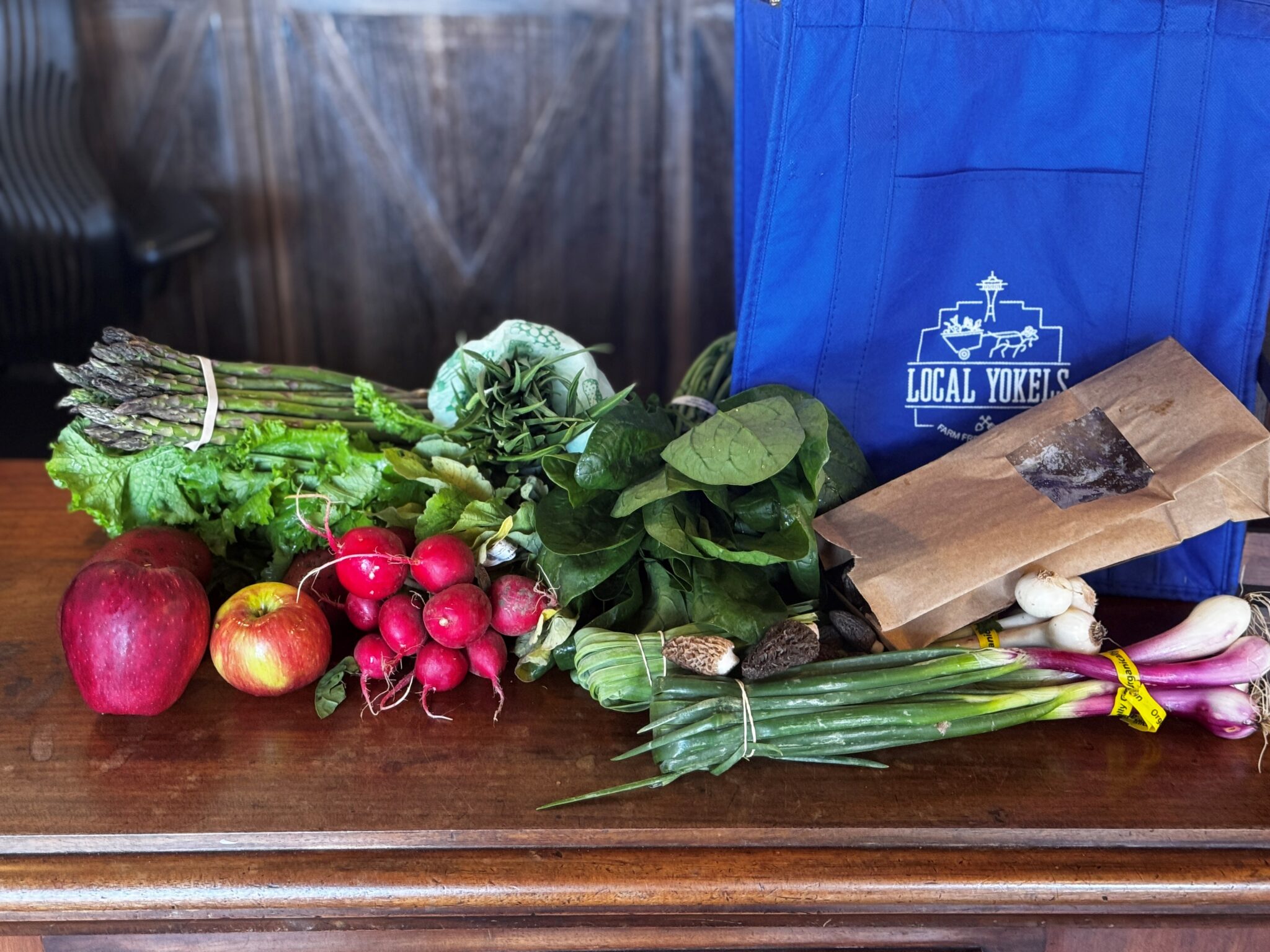
The City’s healthy food access program, Fresh Bucks, and our office’s healthy school snack Fresh Fruit & Vegetable Program, will also expand local sourcing this year. Both programs will grow the share of food purchases spent on local and sustainable produce by 62%, supporting local farms, distributors, farmers’ markets, and retailers. We expect Fresh Bucks customers to nearly triple purchases of produce from small, independent, and culturally specific grocers.
We are partnering with the Human Services Department on food investments like Farm to Preschool, where our partners are increasing local produce purchases for food bags distributed to families at 45 preschools.
Our partnership is also supporting the Seattle Food Committee. They plan to source 40% of produce locally this year through group purchases, improving access to fresh produce at Seattle food banks. The Meals Partnership Coalition is also expanding purchases of local proteins through group purchasing for Seattle meal programs.
UW Dining Joins “Coolfood Pledge”
The University of Washington’s upcoming Sustainability Action Plan includes several initiatives to strengthen sustainable dining practices. UW Dining plans to become a signatory to the Coolfood Pledge this year, a commitment to reduce food-related emissions. It also plans to expand the OZZI reusable container program, building on prior success with support from Seattle Public Utilities.
UW Dining is also increasing its commitment to local, sustainable, and equitable food sourcing. In February, UW started purchasing salmon from Muckleshoot Seafood, supporting both sustainable fisheries and a tribal enterprise. They are exploring additional partnerships, including collaborating with Farmstand Local Foods and the UW Farm.
“When University of Washington buys from local farmers, fisheries, and producers, we strengthen regional partnerships, support hardworking families and businesses, and bring fresher, more flavorful food to our students, and show our commitment to caring for both our campus community and the world beyond it,” said Chef Tracey MacRae, Associate Director and Executive Chef at UW Dining.
“We’re taking meaningful steps to reduce our environmental impact and model the kind of responsible leadership we hope to inspire in our students. These decisions are about more than what is on the plate — living our values, investing in our future, and creating a dining program that our campus can feel proud of,” she continued.
Seattle Public Schools Pursues “Eat Real Certification”
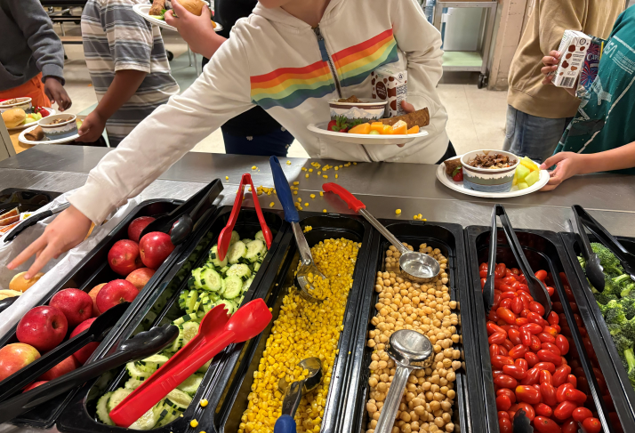
Seattle Public Schools Culinary Services will continue transforming school meals for students by pursuing Eat Real Certification during the 2026-27 School Year. Eat Real will provide a framework to make SPS menus even more nutritious, culturally relevant, and sustainable. The Eat Real Certification will highlight SPS’ recent progress and set goals for local sourcing, plant-based entrees, waste prevention, scratch-cooking, and student engagement.
SPS already purchases more than $200,000 in fresh foods from local farms, supported by the Washington State Department of Agriculture’s Farm to School grants and federal school meal funds. In the spring, SPS purchased local ingredients from Puget Sound Food Hub Co-operative, Farmstand Local Foods, and Farm Fresh NW.
OSE’s Healthy Food in Schools partnership also supports Buying with Purpose for school meals. We work with Seattle-based suppliers Cascadia Produce, Food Oasis, and IRC New Roots to source fresh produce for the Fresh Fruit & Vegetable Program.
“We see this as another strong example of what’s possible when Seattle Public Schools and the City work side by side, aligned around our students. As we move toward universal meals, partnerships like this expand access to fresh, nutritious food while supporting local growers,” said Aaron Smith, Director of SPS Culinary Services. “We’re committed to making sure every student has meals that are healthy, appealing, and reflective of our communities, with the support our schools need to deliver this work well.”

Join us in Buying with Purpose
The City’s Buying with Purpose initiative aims to engage more partners in values-aligned food purchasing. These efforts will also inform strategies in the City’s upcoming Climate Action Plan, which charts a course for us to build a healthier, safer, and more resilient Seattle for everyone.
Institutional food service providers, restaurants, retailers, and chefs can learn more through the City’s Buying with Purpose Guide to Food Purchasing. To get involved, contact our food policy advisor, Chris Iberle, at: chris.iberle@seattle.gov.
You can join the movement by asking your local cafeterias how they are “buying with purpose” and by choosing foods from local, sustainable producers and businesses.