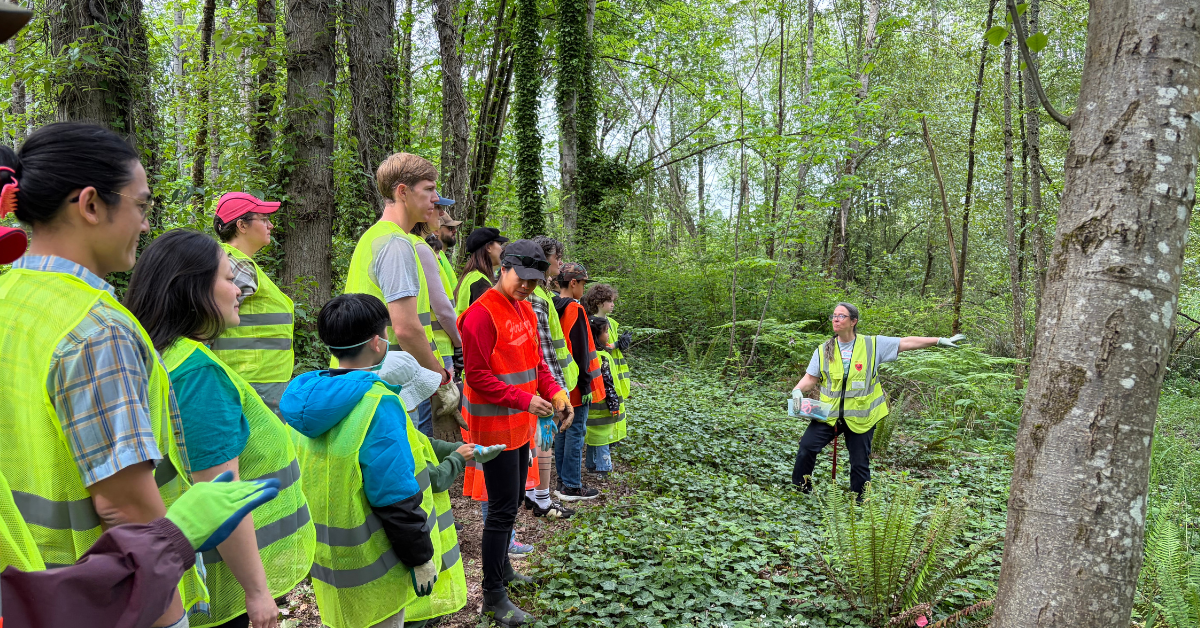
 Rising Star Elementary Vice Principal, Jennifer Kovach, provides students and parents with an overview of the plants and animals in the forested area by the school. The group is preparing to pull invasive ivy from the ground and off trees. Photo by Chris Liu.
 Since we announced our new Foresting Seattle Program last fall, our team, community, and City partners have significantly grown our Foresting Seattle efforts. Together, we’re restoring local urban forests, providing education and workforce training, and planning for tree planting and care.
Foresting Seattle is a collaborative, neighborhood-based approach to growing urban forests in our priority neighborhoods of Chinatown-International District (CID) and Beacon Hill by strengthening community partnerships and coordinating work across four City departments. The program works on tree planting and long-term care, workforce development, and restoration of forested areas near schools, parks, and low‑income housing.
Forests located in urban areas provide cool shade during extreme heat, improve air and water quality, manage stormwater runoff, and attract people to local businesses and community spaces. Foresting Seattle has three key focus areas: urban forest restoration, neighborhood teams, and job training and opportunities.
Urban Forest Restoration: Building Momentum on the Ground
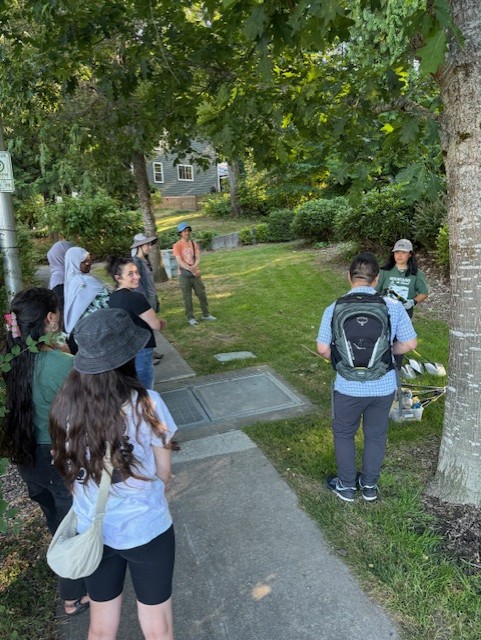
Our Foresting Seattle Program partners at the Green Seattle Partnership (GSP) have restored 45 acres and planted more than 6,000 trees across Beacon Hill’s parklands, including around the Cheasty Greenspace, Cheasty Boulevard, East Duwamish Greenbelt, Dearborn Park, and Maple School Ravine. Professional restoration crews are removing invasive species, improving soil, and planting trees and plants in strategic locations.
Through summer 2029, Foresting Seattle will restore more than 60 acres of urban forest and plant more than 10,000 trees across Seattle Parks and Recreation lands, public housing properties, and public-school sites. That’s more than 45 football fields worth of forest!
At Rainier Vista and Rising Star Elementary, our partners at ECOSS and Mountains to Sound Greenway Trust are working closely with the community to ensure restoration responds to community priorities and the needs of the land. In early May, students, parents, and teachers at Rising Star Elementary in Beacon Hill removed invasive English ivy from trees – a first step in restoring the health of the forest.
The four-acre site by the school, known as “Coyote Glen,” serves as an invaluable hands-on outdoor learning space that helps students see how their work protects tree health and habitats for birds and other wildlife. These activities will continue through the summer and fall, laying the groundwork for future planting of native trees and plants.
Neighborhood Teams: Community-Led Canopy Expansion
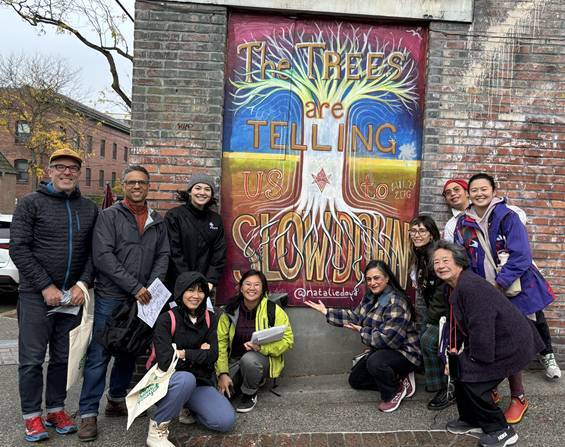
Foresting Seattle’s two priority areas are the Chinatown-International District (CID) and Beacon Hill. These communities have fewer trees than other neighborhoods, adding to disproportionate climate change impacts like extreme heat, flooding, and air pollution.
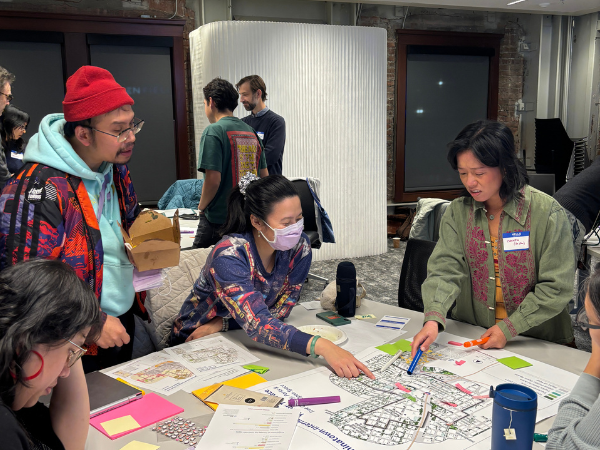
In the CID, 12 community members are working together as a Neighborhood Team to shape tree-planting recommendations grounded in neighborhood priorities, cultural context, and guidance from City urban forestry experts.
This summer, the CID Neighborhood Team will partner with community organizations like Friends of Little Saigon, Chinese Information and Service Center, Seattle CID Preservation and Development Authority, InterIm CDA, and the CID Business Improvement Area to seek community input on their tree planting recommendations. The Team will host tabling events, walking tours, small business outreach, and focus groups available in Vietnamese, Mandarin, Cantonese, and Taishanese.
In the fall, Foresting Seattle will launch the Beacon Hill Neighborhood Team, building on the strong model in the CID. We are starting to reach out to Beacon Hill community organizations, businesses, and neighborhood leaders to help shape community-based recruitment for the Neighborhood Team.
Youth Green Corps: Growing the Next Generation of Stewards
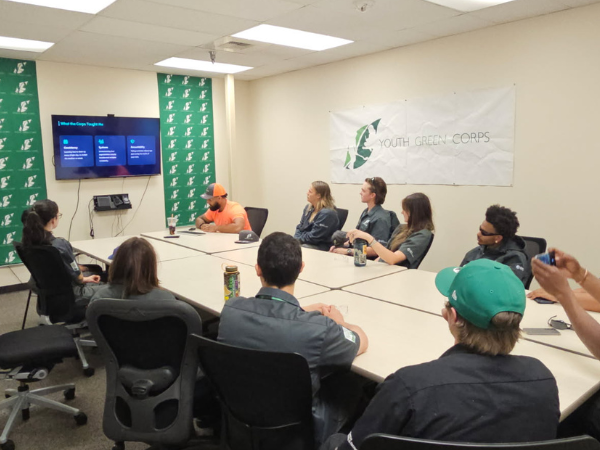
Foresting Seattle is also investing in the future of Seattle’s urban forest through Seattle Parks and Recreation’s Youth Green Corps (YGC). The program gives young people hands-on experience in tree care, restoration, and environmental stewardship, while building job skills and pathways into well-paying green careers in the government and private sectors.
The first Foresting Seattle YGC cohort started in April and is comprised of 10 young adults, ages 18–24, from diverse backgrounds and neighborhoods across Seattle. Over the past two months, the cohort has developed skills ranging from first aid and safety to forest restoration techniques. A recent YGC graduate visited the Foresting Seattle cohort to share the success of his landscaping business, inspiring young people to become climate and environmental entrepreneurs.
The cohort will also train with local arborist company, Bartlett Tree Experts, to learn chainsaw safety and “rigging” basics like knot-tying and rope systems. Training will end in July, after 14 weeks of on‑the‑job experience across multiple Parks divisions.
What’s Next and How to Get Involved
The Foresting Seattle program shows how the City and community members are partnering to make quick, intentional, and long-lasting progress in growing and nurturing Seattle’s urban forests.
Join us in caring for our local urban forests at one of Green Seattle Partnership’s planting or restoration events throughout the summer!
Led by our team at OSE and Seattle Parks and Recreation, with funding support from a 2024 grant from the U.S. Department of Agriculture Forest Service, Foresting Seattle is a collaboration between community members, organizations, and City departments, including Seattle City Light, Seattle Department of Transportation, and Seattle Public Utilities.