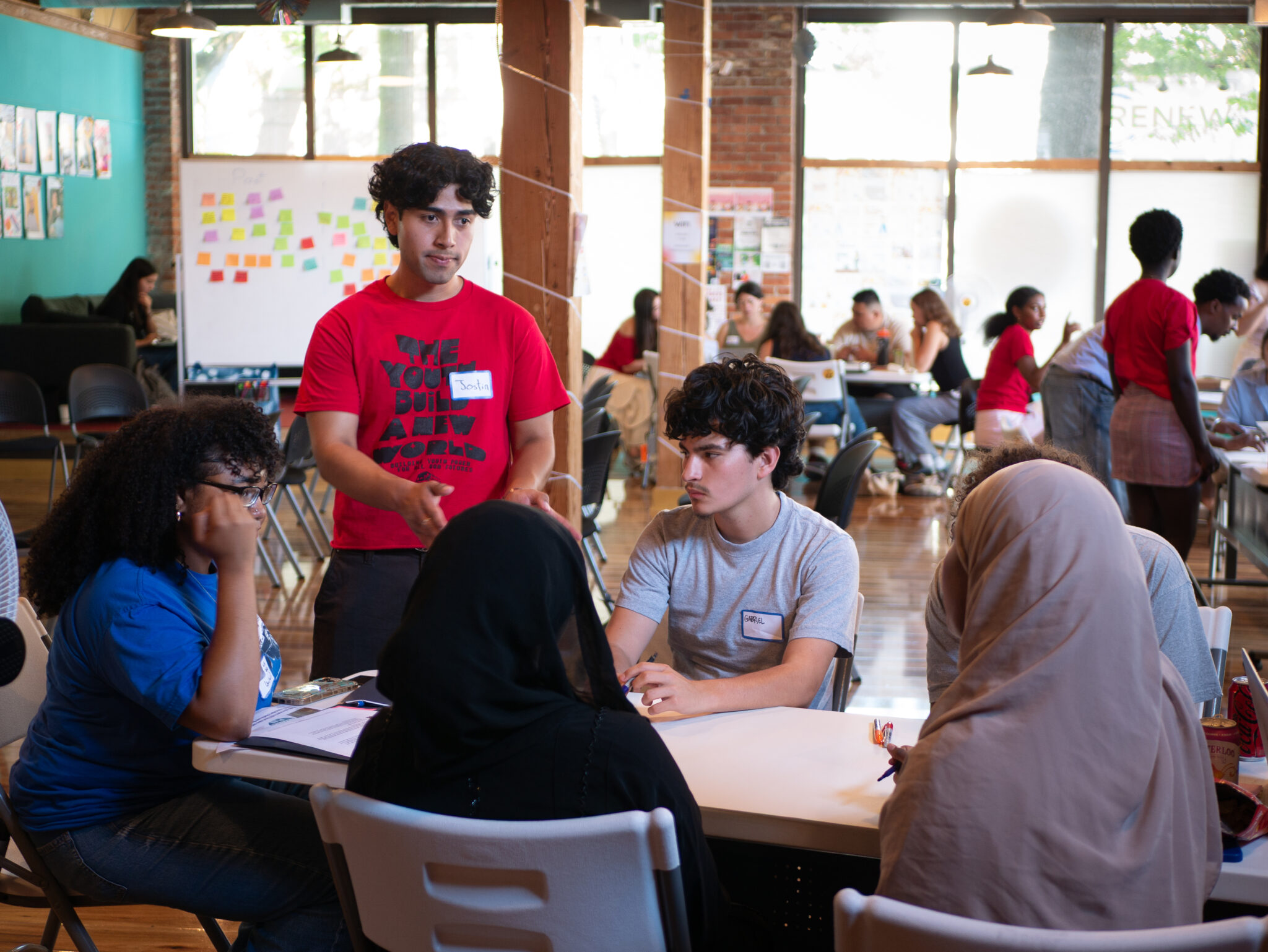
 The Washington Bus Education Fund fellows, OSE staff, and youth smiling at the first-ever youth climate assembly that will inform the updated One Seattle Climate Action Plan. Photo by The Bus fellow Sydney Lok.
 Youth have grown up in a world regularly disrupted by climate change. School closures from extreme heat and flooded neighborhoods cause instability, while wildfires and poor air quality threaten their health and safety. Youth voices are important to creating the policies that will shape their futures.
This summer, The Washington Bus Education Fund (The Bus), — in partnership with our team at OSE, Seattle’s Green New Deal Oversight Board, and the People’s Economy Lab — hosted a multi-session youth assembly with 14 local youth, ages 16-25 from diverse backgrounds and neighborhoods across Seattle. Participants, including a representative of the Seattle Youth Commission, shared their personal experiences with environmental injustices and brainstormed solutions to inform the City of Seattle’s new Climate Action Plan.
“Everyone that’s older won’t be here to experience the big effects that climate change will have,” said Kisaya Canada, a youth fellow with The Bus.
Stories of Eco-Anxiety Inspire Solutions
Day one of the assembly focused on collective experiences around extreme weather events. Many youths who live in the Duwamish Valley exchanged stories of king tide flooding and the damage, fear, and other long-term impacts that come with it.
One participant described fearing for their grandparents’ safety during heat waves. Other youth connected over seeing personal accounts of disasters that extended beyond Washington, like the Eaton and Palisades Fires in California, all over social media.
On the second day, participants focused on developing solutions to address these experiences. Some emphasized providing language-inclusive education on identifying and addressing heat-related illness to reduce the health risks associated with extreme heat. Youth also talked about solutions to reduce climate pollution and promote safety and accessibility, such as climate resilience upgrades to buildings, transit, and other city infrastructure.
At the end of the session, participants reflected on the past two days. One participant shared his excitement around learning more about current climate solutions happening in Seattle, feeling empowered to educate his community about climate preparedness.
Community Assemblies Bring Underrepresented Voices into Policymaking
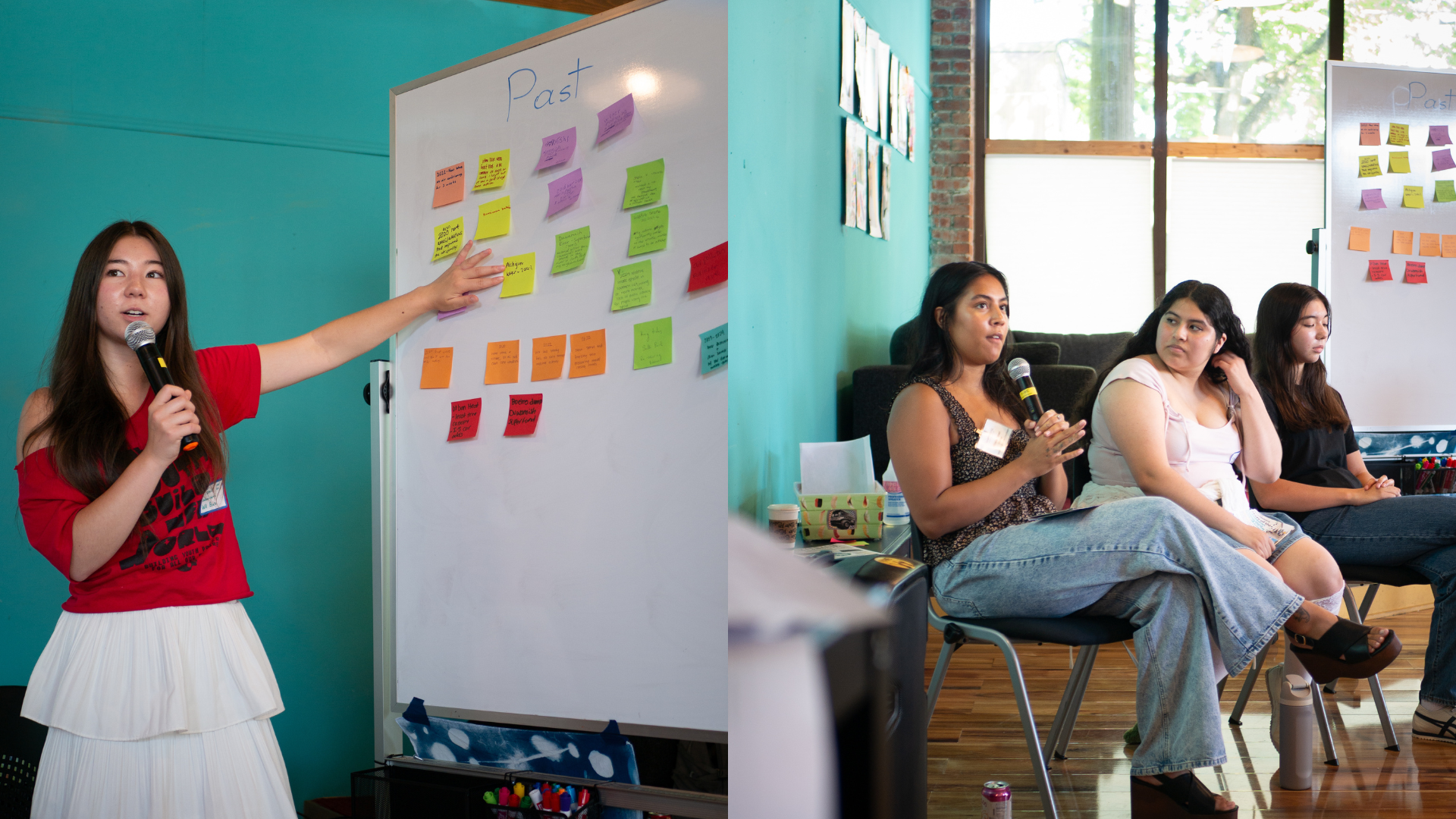
Community assemblies are forums that bring people together to make decisions and influence government actions as a community. The Green New Deal Oversight Board worked with People’s Economy Lab and OSE to bring the community assemblies model to Seattle for the first time last year, partnering with local groups MLK Labor and the Urban League of Metropolitan Seattle, to discuss climate solutions with union members, workers, community members, and advocates. These partnerships have helped provide a framework for future assemblies.
At the City of Seattle, we focus climate adaptation efforts and investments in communities hit first and worst by climate change, including Black, Indigenous, and People of Color (BIPOC), immigrants, youth, and people in low-income neighborhoods. We work closely with organizations embedded in these communities, like The Bus, to meet people where they’re at.
The Bus provides workforce training to help youth advocates become leaders in organizing and local policy, focusing on voter registration support and civic education. The organization offers a 10-week, hands-on, paid youth fellowship in grassroots organizing and community building. This summer’s fellowship program and education committee led various aspects of the community assembly, spent time recruiting other youth to participate, and facilitated programming and discussions.
“I mean, climate decisions are our future, right?” The Washington Bus fellow Jostin Cuenca said. “And it’s not just a future for us but for the next generations, too. When we think about our lives, it’s a very important topic for us.”
What Happens Next
Solutions brainstormed by the youth will inform the City’s upcoming One Seattle Climate Action Plan update. The modernized Plan, to be released in late 2026, will address the ways climate change has worsened in the last decade, focusing on climate resilience, building a green economy, protecting public health, and heavily reducing emissions.
We’ll work together with our partners to host another community assembly to inform the Plan. The next assembly, coming this fall, will engage urban Native communities in and around Seattle.
OSE is incredibly grateful to all the assembly participants, The Washington Bus Education Fund, People’s Economy Lab, the Green New Deal Oversight Board, and our City partners for everyone’s leadership, knowledge, and time. Get updates on the One Seattle Climate Action Plan by subscribing to OSE’s newsletter.