Find Posts By Topic

Posts tagged with Building Energy Benchmarking Archives - Page 2 of 3 - Greenspace

Exploring Building Performance Standards: A New Policy to Reduce Building Sector Emissions

In Seattle, buildings are one of the largest and fastest growing sources of climate pollution, responsible for more than a third of our City’s greenhouse gas emissions. These emissions pollute our air, accelerate climate change, and harm people’s health and the environment, disproportionately impacting communities of color and people with… [ Keep reading ]

2021 Energy Benchmark Reports Due July 1

Note: This deadline has passed. Energy performance (benchmarks) for the 2021 calendar year must be updated in Portfolio Manager by July 1, 2022 for all multifamily and non-residential buildings 20,000 SF or larger. To be in compliance, your building’s Portfolio Manager account must be: Once you have completed all the… [ Keep reading ]

White House Council on Environmental Quality Chair Brenda Mallory Visits Seattle to Talk Buildings and Climate

The buildings we live and work in are responsible for more than 1/3rd of Seattle’s climate pollution, primarily due to the on-site burning of fossil fuels such as fracked gas and oil for heating, hot water and appliances. OSE’s Buildings & Energy team works to develop and implement policies and programs… [ Keep reading ]

Seattle’s Building Emissions are Rising – Here’s What the Data Tells Us

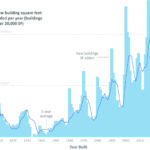
Seattle’s buildings are responsible for more than one-third of the city’s core greenhouse gas emissions – and rising. According to the most recent greenhouse gas inventory, climate-polluting emissions in buildings increased 8% between 2016 and 2018, driven by burning fossil fuels like fracked gas and oil for heat, hot water,… [ Keep reading ]

2019 Building Performance Data Published

The City of Seattle recently published 2019 building energy performance data for Seattle’s largest commercial and multifamily properties. The data is available to view in Seattle’s Open Data Portal along with 2015 – 2018 building performance data. All five years of data can be downloaded and include energy performance metrics… [ Keep reading ]

Benchmarking Enforcement Action Delayed for Non-Compliant Buildings

In response to the ongoing pandemic, owners will have until 1/1/2021 before enforcement action is pursued. At that time, owners that remain non-compliant with SMC 22.920 will be subject to 2nd quarter fines based on building size. See the Energy Benchmarking enforcement page for more information.  If you need help complying or… [ Keep reading ]

Check Your Compliance Status for 2019 Reporting

The online compliance portal for Energy Benchmarking is now available to check compliance for 2019 benchmarking reports. Once you have completed the Annual Update Checklist, you can check your building’s compliance status at the Seattle Energy Benchmarking Compliance Portal. To check your status, you will need your Seattle OSE Building ID or… [ Keep reading ]

2019 Energy Benchmark Reports Due July 1

The City of Seattle has extended the annual deadline forbenchmarking and reporting of 2019 data to July 1st, 2020.Building owners of nonresidential and multifamily buildings 20,000SF or larger are encouraged to use the additional time to reviewtheir Portfolio Manager accounts, update space use details toaccurately reflect recent building uses, and… [ Keep reading ]

2018 Building Energy Performance Data Available

Seattle’s Energy Benchmarking Ordinance directs the City to annually share building-specific data with the public beginning with 2015 data. Building data is now available online for 2015, 2016, 2017, and 2018. Find additional information on data transparency and summary data tables here.  Explore the 2015-2018 data on our data visualization site here. 

2017 Building Performance Profiles Published

The City of Seattle has published customized building performance profiles based on reported 2017 annual benchmarking data. Reports are available via our online mapping tool, and include details on energy use per square foot, ENERGY STAR scores, total consumption, greenhouse emissions, and more. With three years of comprehensive energy consumption… [ Keep reading ]