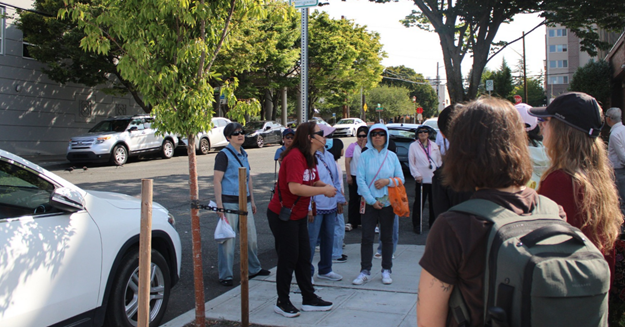
 More than two dozen families and elders joined a tree walk in Seattle’s Chinatown-International District this summer, led by Karia Wong, community impact director at the Chinese Information and Service Center.
Seattle communities and our urban forest need each other. Trees help people thrive by providing shade to stay cool on hot days, cleaning our air, and offering leafy spots to gather, play, and connect.
Our urban forest is made up of all the trees growing in parks, along streets, and in yards. Whether tending to your backyard or volunteering at your favorite park, we all play an important part in growing and protecting this shared resource.
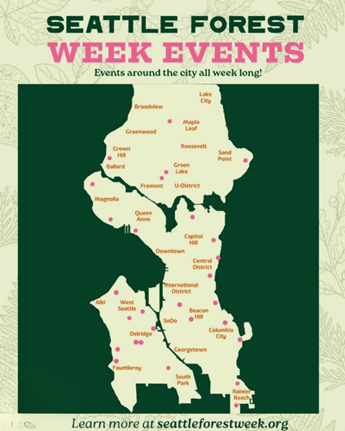
The City partners with communities to understand your priorities for where to plant trees and how we can work together to get trees in the ground. We hope you’ll join us at a Seattle Forest Week volunteer event, which kicks off this weekend on Nov. 7! Sign up to support any of the 40 locations across the city.
The City of Seattle comes together to partner with community members to protect and expand tree canopy. We’re making industrial areas greener, restoring forested natural areas, planting trees, helping property owners plant trees, and more.
One of our priorities is adding trees to areas that need them the most.
Community at the Roots of Growing Neighborhood Trees
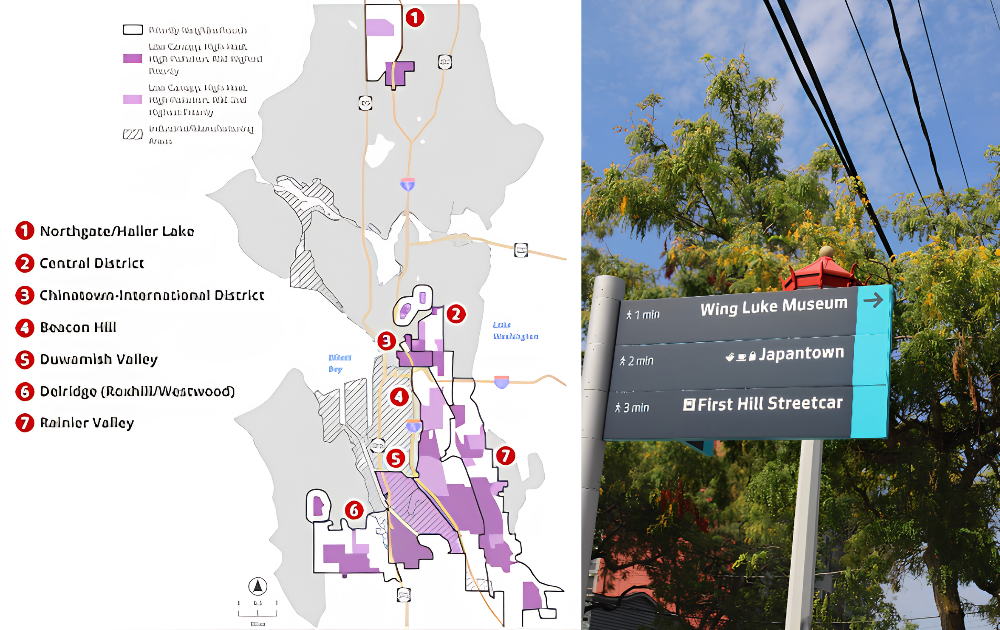
Community partnerships are at the root of our upcoming Tree Equity Plan. The plan will focus on adding trees to close canopy gaps in neighborhoods where they are needed most.
To build a plan that truly reflects neighborhood voices, we partnered with Headwater People, a local Native-led consulting firm, to engage with 50 community members and neighborhood organizations over the last year.
We hosted six sessions in neighborhoods across the city and followed up with additional interviews with community participants. We are centering neighborhoods with fewer trees that face higher heat and air pollution. These areas include the Chinatown International District (CID), Beacon Hill, the Duwamish Valley, the Rainier Valley, Roxhill and Highland Park, the Central District, and Northgate and Haller Lake.
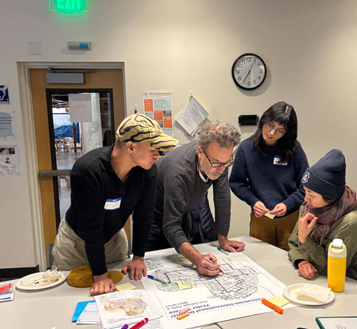
We heard stories about what trees mean to different communities and clear visions of what residents want for their neighborhoods. Together, we identified locations for new trees, ways to make tree maintenance affordable for neighbors, and new outreach strategies to involve community members.We also talked about how to ensure greener neighborhoods don’t displace current residents, and how trees can help lower energy bills for community members by providing natural cooling in the summer and insultation to cold weather winds.
The Tree Equity Plan, coming next year, will reflect what we heard and provide neighborhood-based strategies for adding trees. It will complement our upcoming citywide Climate Action Plan. Community input is also shaping the Climate Action Plan, which will cover a range of climate strategies, from trees and transit to food and buildings.
Listening and Learning in the Chinatown-International District and Beacon Hill
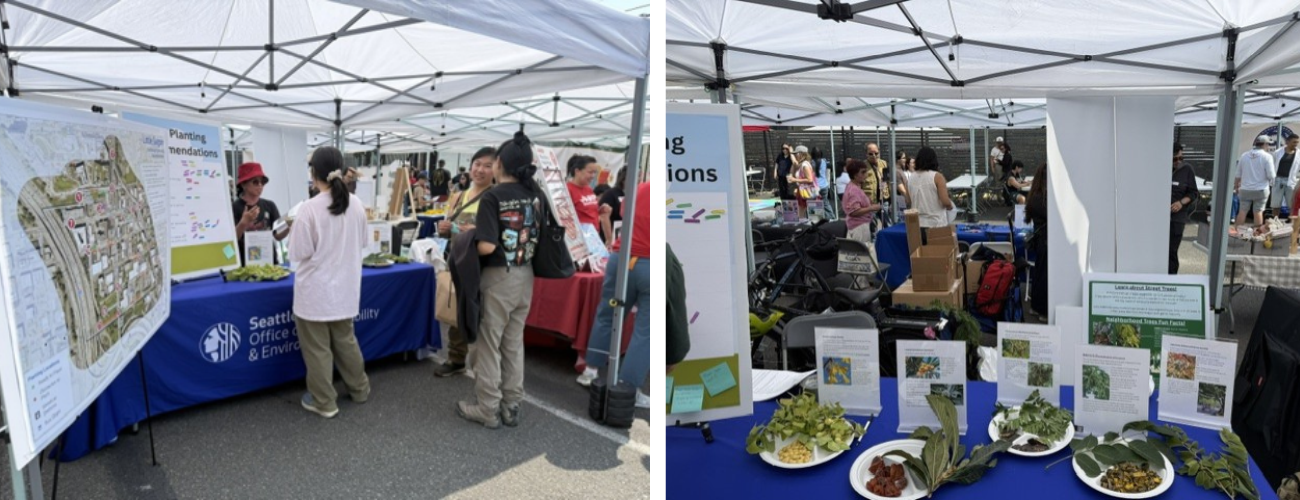
Our Foresting Seattle program turns community feedback into action in the CID and Beacon Hill. The program, funded by a federal grant, is helping grow our urban forest by strengthening community partnerships and streamlining City collaboration.
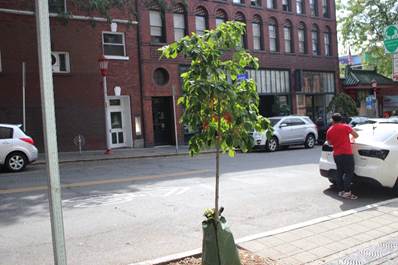
The program forms community “Neighborhood Teams” made up of residents, workers, and people who have longtime personal ties to their neighborhood. Formed last fall, the 12-person CID team has been educating neighbors and creating aguide to planting and caring for hundreds of trees across public and private land in the neighborhood.
In August, we connected with more than 200 community members through outreach at community events, educational tree walks, and hosting focus groups held in multiple languages. We learned how important it is for new trees to reflect environmental needs, cultural values, and everyday experiences.
“On hot days when I walk to the store, the sun is so strong,” a CID resident told us. “Having more trees here will make it easier for my parents to get around, and it’ll make our streets feel more alive.”
Her enthusiasm sparked others to join the conversation. They swapped stories about favorite childhood trees and how greenery shaped a sense of belonging.
During Friends of Little Saigon’s “Celebrate Little Saigon” event, a family stopped by our demonstration of leaves and fruits from common CID trees. The youngest child said, “I have one of those trees next to my school so it’s cooler when we line up outside for recess.”
That comment captured what so many people voiced throughout the day: trees aren’t just part of the landscape. They’re vital to community and support people in their daily lives.
This work was made possible through the dedication of the CID Neighborhood Team and our partners, including the Chinese Information and Service Center (CISC), InterIm Community Development Association (ICDA), Seattle Chinatown International District Preservation and Development Authority (SCIDpda), Friends of Little Saigon, and Community Liaisons with the Department of Neighborhoods.
These conversations and insights are helping the City prioritize planting locations, select tree species, and form partnerships to shape future tree investments around the people who will benefit from them most.
Next, we are preparing to launch a Neighborhood Team in Beacon Hill, following the same community-led approach in the CID.
Until then, we hope you’ll join us for Seattle Forest Week! Visit the Seattle Forest Week website to find a volunteer event and sign up.
Read more about OSE’s work to grow and care for Seattle’s tree canopy: